
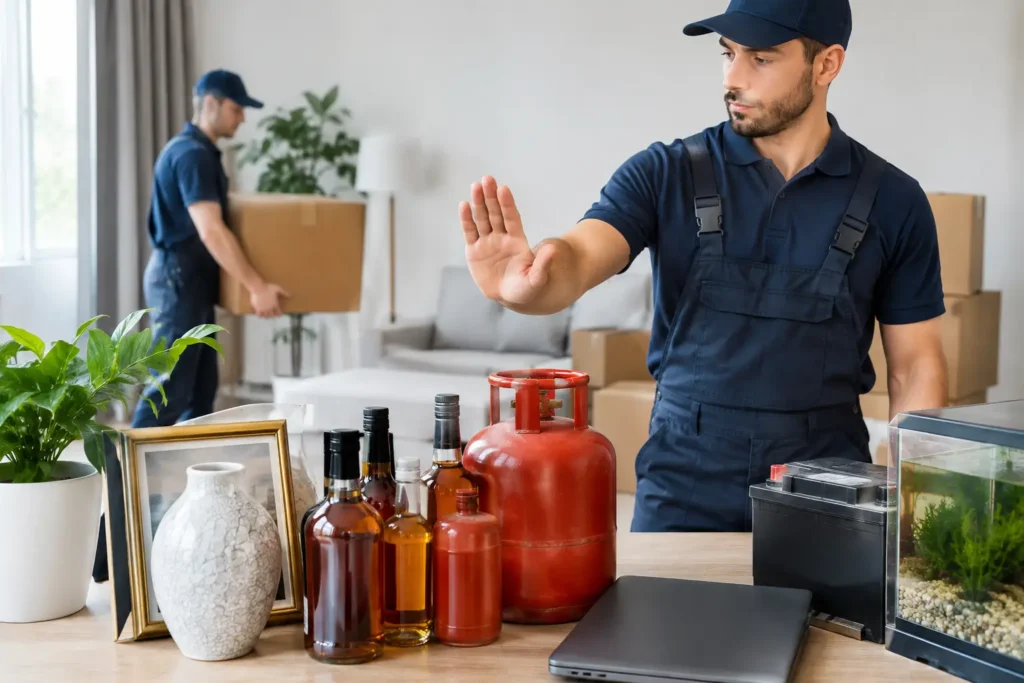
A partly packed garage is where moving-day surprises often begin. A few tins of paint, a gas bottle for the barbecue or a container of pool chemicals may seem harmless sitting at home, but they can create a real safety risk once loaded into a moving truck. Knowing which items movers cannot transport before packing starts helps protect your belongings, your movers and everyone sharing the road.
Professional removalists must work within safety, insurance and transport requirements. That means some goods cannot go in the truck at all, while others need to be discussed early so the right plan can be made. A quick check of your garage, shed, laundry and garden storage can save a stressful last-minute unload.
Which items movers cannot transport?
The short answer is hazardous, illegal, perishable and irreplaceable items are generally not suitable for a removals truck. Trucks carry furniture, cartons and personal effects that can shift during travel. A leak, spark or broken container can quickly damage a full load or put people at risk.
Exact restrictions can vary between removalists, insurance policies and whether your move is local or interstate. If you are unsure about an item, ask before moving day rather than placing it in a sealed carton. Clear information gives your moving team the chance to advise you properly.
Flammable and explosive goods
Petrol, diesel, kerosene, methylated spirits, paint thinners, solvents and firelighters should not be packed with household furniture. The same applies to fireworks, ammunition, flares, explosives and many aerosol cans. Heat inside a vehicle, vibration on the road and accidental damage to packaging can turn these everyday products into a serious hazard.
Gas bottles also need special attention. BBQ bottles, camping cylinders and patio heaters may contain pressurised gas even when they feel almost empty. In most cases, arrange for these to be emptied, returned, safely transported yourself according to the supplier’s directions, or replaced after the move. Never hide a gas bottle in the bottom of a box.
Chemicals, poisons and hazardous household products
Many homes have more hazardous products than expected. Pool chlorine, pesticides, weed killers, fertiliser, drain cleaner, bleach, acids, batteries and car-care chemicals can react with other items or leak during transport. Garden sheds and cupboards under the sink are common places for these products to be missed.
Do not assume that a tight lid makes a product safe for removal. Containers can crack, labels can come loose and incompatible chemicals can cause fumes or reactions if stored together. Use up what you can before moving, give suitable unopened products to a neighbour, or take them to an approved household chemical disposal service.
Lithium batteries deserve a separate mention. Loose rechargeable batteries, damaged power banks, e-bike batteries and batteries from tools or devices can overheat or catch fire if crushed or short-circuited. Small undamaged batteries may be suitable to carry with you when protected, but larger or damaged units should be discussed with the manufacturer or a specialist recycler.
Food, plants and living things
Removal trucks are not designed to carry pets, people or livestock. Animals need secure, climate-appropriate travel arranged separately, with regular comfort stops where needed. This is safer and far less distressing for them.
Perishable food is another poor fit for a moving truck, especially on a long trip. Refrigerated, frozen and open foods can spoil, leak and attract pests. Empty and defrost your fridge and freezer before the move, then take a small esky of essentials in your own vehicle if required.
Plants may sometimes be moved on a short local relocation, but this depends on their size, condition and the removalist’s policy. Soil can spill, pots can break and plants may not cope well in a closed truck. Interstate moves can bring additional biosecurity restrictions, particularly when travelling across state borders. Check what applies to your destination before promising a favourite garden plant a place on the truck.
Valuable documents, cash and irreplaceable items
Removalists can carefully transport a great deal, from family furniture to delicate specialty items. However, certain belongings are best kept with you because replacement is difficult or impossible. Passports, birth certificates, property documents, wills, jewellery, cash, medication, laptops with critical files and sentimental keepsakes should travel in your personal vehicle where possible.
This is not a reflection on your movers’ care. It is sensible risk management. These items are small, easy to misplace during unpacking and often have a value that goes well beyond their monetary worth. Make one clearly labelled essentials bag or lockable case and keep it with you from departure to arrival.
Illegal, unsafe or unidentified goods
Movers cannot carry illegal substances, stolen goods or anything that breaches transport laws. They also cannot safely take an unknown liquid or powder in an unmarked container. If you find an old tin or bottle in the shed and cannot identify it, do not pack it or pour it down the drain. Contact your local council or an appropriate disposal service for guidance.
The same rule applies to damaged containers. A cracked fuel can, corroded chemical drum or swollen battery is not made safe by wrapping it in a towel. Set it aside and arrange proper disposal before the move.
Items that may need a conversation, not a refusal
Some belongings are not automatically prohibited, but they need advance notice. This is where good communication makes the difference between a smooth move and a change of plan at the front door.
Large aquariums, for example, need to be emptied before transport. Water adds significant weight, and fish must be moved separately with an appropriate plan for their welfare. Very heavy safes, commercial equipment, oversized gym gear and large machinery may require extra people, specialised lifting equipment or separate transport.
Pianos, pool tables and spas also need careful assessment. They are not ordinary furniture, but experienced movers can often handle them when dimensions, access and weight are known in advance. At Springall Movers, clear details before the booking help the team organise the right equipment and protect both the item and the property.
Certain appliances require preparation too. Fridges and freezers should be empty, clean and dry. Washing machines need their hoses disconnected and drained, while fuel-powered mowers, whipper snippers and generators should have fuel removed where required. If an appliance has a battery, gas connection or water supply, flag it early.
How to prepare restricted items before moving day
Start with a practical walk-through two weeks before your move. Check the garage, shed, laundry, kitchen cupboards, car boot and outdoor areas. These are the places where restricted goods tend to build up quietly over time.
For products you are keeping but cannot move, decide whether to use them before the move, give them away responsibly or dispose of them through the correct channel. Do not leave this task until the final night, when it is tempting to pack first and ask questions later.
Keep a separate pile for anything you need to transport yourself. This might include your documents, medications, chargers, valuables, a change of clothes and basic cleaning supplies that are safe to carry. Having these essentials in one place also helps you settle in on the first night.
When requesting a quote or confirming your booking, mention any unusual, heavy or high-care item. Photos, measurements, stair access, narrow doorways and parking details all help your removalist prepare. Honest information upfront means fewer surprises and a safer day for everyone.
A simple rule for a safer move
If an item can burn, leak, explode, spoil, react with another product or cannot be replaced, do not put it into a moving carton without checking first. That one rule covers most of the goods movers cannot transport and helps keep your removal organised from the first box to the final delivery.
A little preparation protects more than your furniture. It gives your moving team room to do what they do best: handle the right belongings carefully, efficiently and with respect for the home you are leaving and the one you are about to enjoy.