
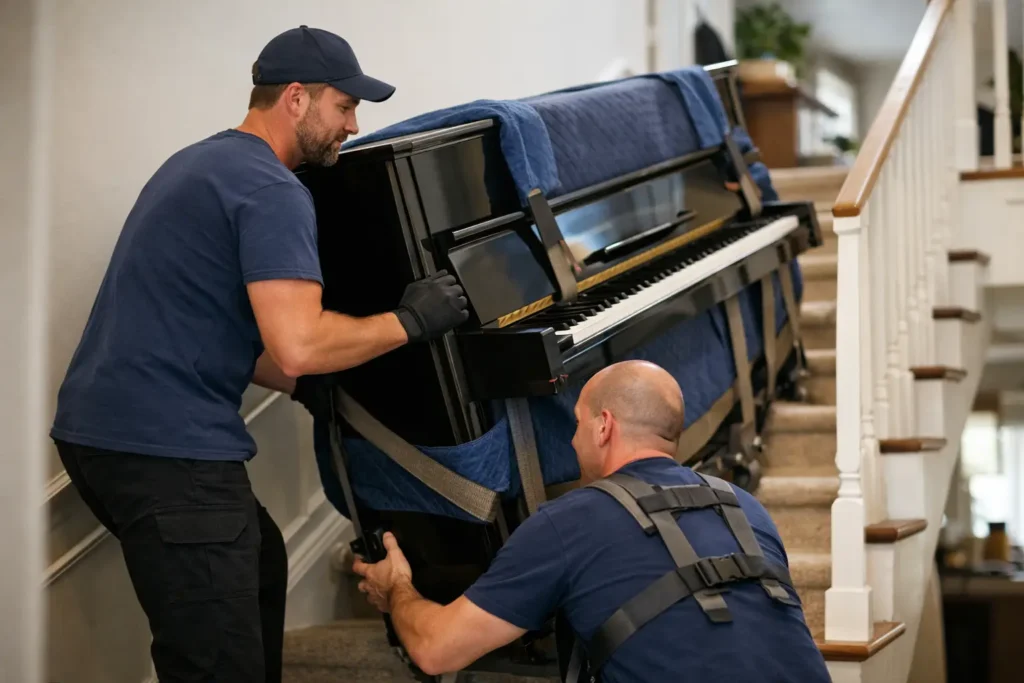
A piano can turn a straightforward move into a serious access challenge the moment it needs to go upstairs. So, can removalists move pianos upstairs? Yes, experienced removalists can often do it safely, but only after assessing the piano, staircase, access points and risks involved. It is never a job to guess your way through on moving day.
A piano is heavy, awkwardly balanced and easily damaged if handled poorly. The staircase, walls, handrails, flooring and the people moving it all need protecting. The right plan makes the difference between getting your piano into its new room safely and creating avoidable damage or injury.
Can removalists move pianos upstairs?
Professional removalists can move many upright pianos upstairs, provided the staircase and access are suitable. Small baby grand pianos may also be possible in some homes, although they usually need more preparation, more space and a carefully coordinated team. Full-sized grand pianos, very tight stairwells and difficult upper-floor access can require a different method or may not be practical through the internal stairs at all.
The answer depends on more than the piano’s weight. An upright piano may look narrow enough to fit, but its depth, height, centre of gravity and the width of the stair turns all matter. A staircase that feels generous when carrying boxes can become very restrictive when a large, heavy instrument has to be tilted and controlled around a landing.
That is why a reliable removalist will ask questions before confirming the job. Clear photos and measurements allow the team to identify issues early, organise suitable equipment and avoid an unpleasant surprise on move day.
What removalists assess before taking a piano upstairs
The first consideration is the type of piano. Compact uprights are generally the most manageable. Taller upright pianos, player pianos and older models can be substantially heavier. Grand and baby grand pianos are normally prepared differently, with detachable parts secured and the instrument protected before it is moved.
Next comes the stairway itself. Removalists need to check the usable width between walls and handrails, the height above the stairs, the number of steps, the steepness and the size of any turn or landing. A straight staircase is often simpler than a narrow stairwell that bends sharply at the bottom or top.
Access to both ends of the move matters too. The team needs a clear route from the truck to the home, through doorways and into the room upstairs. Narrow hallways, low ceilings, security screens, loose rugs, outdoor steps and parked cars can all affect the plan. In Ipswich homes, access can vary widely between Queenslanders, newer townhouses and split-level properties, so assumptions are not helpful.
The condition of the home is also part of the assessment. Solid stairs may be suitable, while damaged treads, unstable handrails or slippery surfaces need attention before anyone attempts the move. Removalists also consider flooring, wall corners and door frames so they can protect them properly.
Why piano stair moves need a specialist approach
Trying to carry a piano upstairs with a few friends is one of those jobs that can go wrong quickly. The weight is not distributed like a fridge or a sofa. Pianos can shift unexpectedly, particularly when they are tilted on stairs, and a loss of control can cause serious injury.
Professional teams use purpose-built moving equipment, protective covers, straps and secure handling techniques. Just as importantly, they work as a team. One person should not be left trying to take the weight while others reposition themselves. Clear communication, controlled movements and planned stopping points are essential.
Protection is not just for the piano. Quality padding and floor protection help reduce the chance of scuffed walls, chipped paint, marked timber stairs or damaged carpet. The team should take their time at corners and landings rather than forcing the instrument through a tight gap.
It may take longer than moving ordinary furniture, but careful work is the right trade-off. A piano is not something to rush because the truck is loaded or the day is busy.
When upstairs piano removal may not be the best option
Sometimes the safest answer is that the piano should not go up the stairs. This does not mean the move has failed. It means the access needs a different solution.
A staircase may be too narrow, a landing may not allow enough turning room, or the overhead clearance may prevent the piano from being safely angled. In other situations, an upper-level balcony, external access route or specialised lifting arrangement may be considered. The right option depends on the property, the instrument and the site conditions.
There are also times when placing the piano downstairs is the more practical choice. This can make future tuning, servicing and eventual removal easier, particularly if the upstairs room is difficult to access. If the piano is going into a music room, check that there is space for the lid, stool and comfortable seating once it is in position.
A good removalist will be honest about these limits. No pressure, no risky promises – just clear advice based on what can be done safely.
How to prepare for a piano move upstairs
You do not need to dismantle or attempt to move the piano yourself. In fact, it is best to leave preparation of the instrument to the people handling it. There are, however, a few practical things you can do before the team arrives.
Start by clearing the full path. Move shoes, pot plants, hallway furniture, children’s toys and anything stored on the stairs or landing. Keep pets and children away from the work area while the piano is being moved. Even a small obstruction can make a difficult carry more hazardous.
Take down fragile artwork or mirrors near tight corners and stairwells. If there is a gate, screen door or internal door that can be secured open, let the removalists know. You should also point out any concerns such as a loose tread, recently painted wall or particularly delicate flooring.
It helps to have the piano’s destination ready before the move begins. Decide where it will sit and make sure the space is clear. Pianos should be kept away from direct sun, damp areas, heating vents and strong temperature changes where possible. Once it is upstairs, it is better not to shuffle it repeatedly across the floor trying to find the right spot.
Information to share when booking piano removalists
Accurate information leads to a safer, smoother move. When requesting help, mention whether the piano is an upright, baby grand or grand, along with any known details about its size or age. Photos taken from the front, side and back are useful.
Share photos of the stairs from the bottom and top, including landings, turns, doorways and the route from outside. If you can provide basic measurements of the narrowest points, that is even better. Let the team know whether the piano is currently upstairs, whether it needs to go upstairs at the new address, and if there are steps, lifts or difficult parking at either location.
This is not about making the process complicated. It gives removalists the information needed to send the right people, bring appropriate protective equipment and arrive with a workable plan. It also means you are less likely to face last-minute changes when everyone is ready to move.
After the piano is in place
Once the piano is positioned, give it time to settle into its new environment. Changes in temperature and humidity during a move can affect tuning, particularly after an interstate relocation or a move between very different homes. It is sensible to arrange tuning after the piano has had time to acclimatise.
Before the removalists leave, inspect the piano and surrounding area with them. Check that it is sitting securely, the pedals are clear and the room is set up as you expected. If the piano has been moved onto a timber or tiled floor, consider whether protective pads beneath the castors are appropriate.
For a piano move involving stairs, the safest approach is simple: get a proper assessment, clear the route and let trained movers control the heavy work. Springall Movers can help households plan challenging piano access with the same care given to every high-value item. A little preparation before the truck arrives can protect your instrument, your home and everyone on the stairs.