
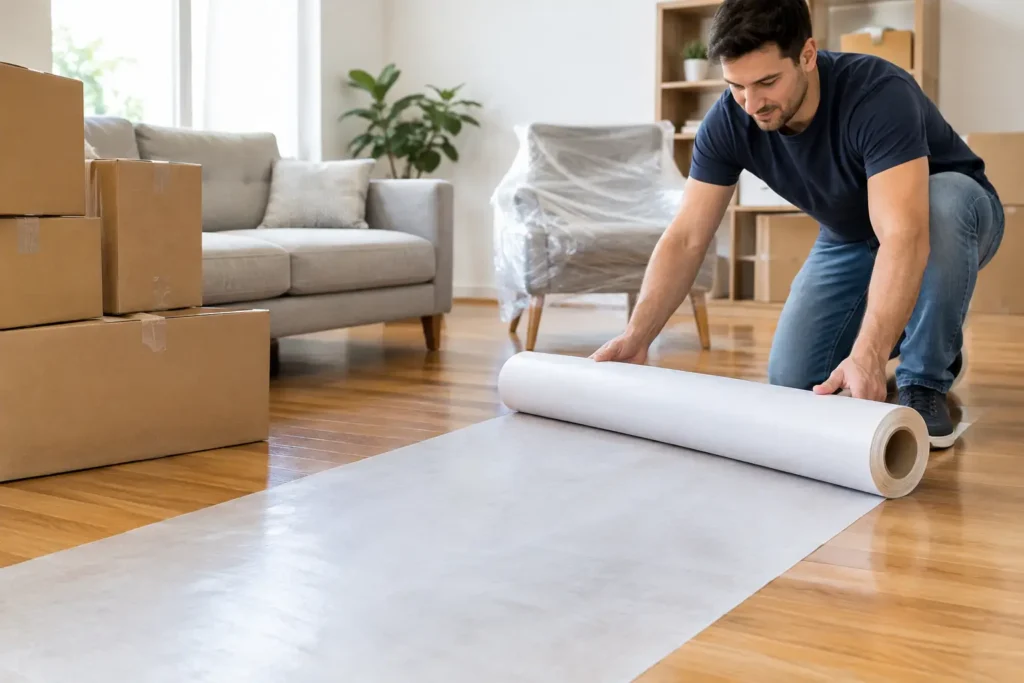
A move can be going beautifully until a dining table leg drags across timber, a wet shoe marks fresh carpet, or a loaded trolley chips a tile at the front door. The best ways to protect floors are usually simple, but they need to be planned before the first box is carried out. A little preparation protects your bond, your sale settlement, and the condition of the home you are moving into.
Floor protection is not only for large house moves. Even a quick apartment move, office relocation or storage run creates plenty of chances for scratches, dents, scuffs and tracked-in dirt. The goal is to create a clear, protected path from the ute to each room, then make sure heavy items are lifted, not dragged.
Start with a clear moving path
Before moving day, walk the route your belongings will take. Check the driveway, front entry, hallway, stairs, lifts and the rooms where large furniture will be placed. Look for narrow turns, loose mats, wet patches and changes in flooring. These are the points where people tend to twist furniture, lose footing or set a heavy item down in a hurry.
Move pot plants, shoes, outdoor furniture and decorative items out of the way. If rain is expected, make an alternative plan for keeping moisture and mud at the door rather than carrying it through the house. In Queensland, a wet driveway after a storm can quickly become a trail of grit across tiles or polished boards.
It also helps to decide where boxes will land before they come inside. Mark one safe staging area in each room, preferably against a wall and away from doorways. That prevents repeated walking and shifting piles across the same section of floor.
Use the right floor protection for the surface
Not all floors need the same protection. The best ways to protect floors depend on the surface, how long the move will take, and whether people will be using trolleys or carrying furniture by hand.
Carpet
Carpet is vulnerable to muddy footprints, spills, flattened pile and snags. Heavy-duty carpet film can be useful on the main walkway, particularly for a busy move or a rental inspection. Make sure the product is designed for carpet and avoid leaving adhesive protection down longer than recommended, especially in warm conditions.
For smaller jobs, clean drop sheets or purpose-made moving blankets placed along the busiest path can work well. Keep them flat and secure at the edges so they do not become a trip hazard.
Timber and polished floors
Timber floors scratch easily under furniture feet, grit and hard plastic wheels. Start by sweeping or vacuuming the path so loose stones and dirt are not ground into the surface. Use clean, non-slip coverings such as felt-backed floor protection or moving blankets, and check that any tape used will not damage the finish.
Furniture sliders can help reposition a lounge or cabinet once it is inside, but use the correct type for timber. They are not a substitute for lifting a heavy item over a threshold or down a stairway.
Tiles, vinyl and laminate
Tiles can crack if a heavy object is dropped, while vinyl and laminate can dent or split at joins. Cover high-traffic routes with firm protective boards or clean runners where practical. Take extra care around tile edges, door thresholds and transitions between rooms.
Avoid dragging appliances, filing cabinets or packed bookcases. Their weight is concentrated in a small area, which can leave a permanent mark even where the floor looks tough.
Concrete and garage floors
Concrete is more forgiving, but it is not immune to damage. Metal furniture legs can leave rust marks, and wheels can carry oil, dirt or small stones into the home. Place a mat at the entry point and check trolley wheels before bringing them inside.
Protect entry points first
The front door, garage entry and hallway do most of the hard work on moving day. Protect these areas before the ute arrives. Lay down a door mat outside and another just inside, then add a runner or protective covering through the main traffic route.
Pay attention to door frames and skirting boards too. When a mattress, fridge or tall cabinet comes through at an angle, the walls and trim are often at risk alongside the floor. Corner guards and furniture blankets provide useful cushioning where space is tight.
If you are moving from an apartment, check building rules before using lift protection, trolleys or coverings in common areas. Some buildings require particular lift mats or booking times. Sorting this out early avoids a rushed start and helps keep shared spaces tidy for neighbours.
Lift furniture instead of dragging it
Most floor damage happens when someone tries to save time by dragging a heavy item a short distance. A sofa, washing machine or packed chest of drawers may move only a metre, but that metre can leave a deep scratch or compressed carpet pile.
Empty drawers where possible, remove detachable legs, and use furniture pads to protect both the item and nearby surfaces. For bulky pieces, measure doorways and turns before lifting. Knowing the route means the team can carry the item through in one controlled movement rather than stopping, twisting and scraping at every corner.
Appliances need particular care. Defrost and dry a fridge before moving it, and keep it upright during transport where possible. Use an appliance trolley with clean wheels and secure straps, then place it carefully on a protective pad or board when it reaches its new position.
Keep wheels, shoes and tools clean
A trolley is helpful for boxes and office equipment, but its wheels can pick up gravel from the driveway or footpath. Wipe them down before they cross the threshold. The same goes for shoes, particularly after rain or when moving between a garden, shed and living area.
Set up a simple cleaning station near the entrance with a broom, dustpan, cloths and a rubbish bag. This makes it easy to remove loose packing tape, broken cardboard and dirt as the move progresses instead of discovering it all after the ute has left.
For a larger move, it is worth assigning one person to keep an eye on the entry path. They can straighten floor coverings, clear obstacles and spot moisture before it becomes a slip or stain problem. It is a small role that makes the whole move safer.
Plan for heavy and awkward items
Pianos, pool tables, spas, safes and large office cabinets need more than a blanket under the feet. Their weight, shape and centre of balance can create real risk for floors, walls and people. These items should be assessed before moving day, including access points, floor type, stairs and any tight corners.
Professional equipment, enough trained hands and a planned route matter here. Trying to manoeuvre a specialty item without the right support can damage floors quickly and can cause injury. If you have a difficult piece to move in or around Ipswich, tell your removal team early so they can prepare the right protection and handling approach.
Protect floors while unpacking too
The risk does not end when the ute is unloaded. Boxes piled in hallways encourage people to drag them aside, and newly assembled furniture can scrape during final adjustments. Keep protective coverings down until large pieces are positioned and the main unpacking is complete.
Place felt pads on the base of chairs, tables and furniture legs before loading them with books, dishes or office supplies. For rugs, make sure the floor underneath is clean and fully dry first. A rug pad can reduce movement and help prevent grit from rubbing against timber or vinyl underneath.
Take photos of floors before and after the move, especially in a rental property or commercial tenancy. They provide a clear record of the condition and help you notice small issues while they are still easy to address.
A careful move starts before the first box
Good floor protection is less about buying every product available and more about thinking ahead: clear the route, cover the busiest areas, keep dirt outside and never drag what should be lifted. When everyone knows where items are going and how they will get there, the move feels calmer and your floors have a far better chance of looking exactly as they did before the boxes arrived.