
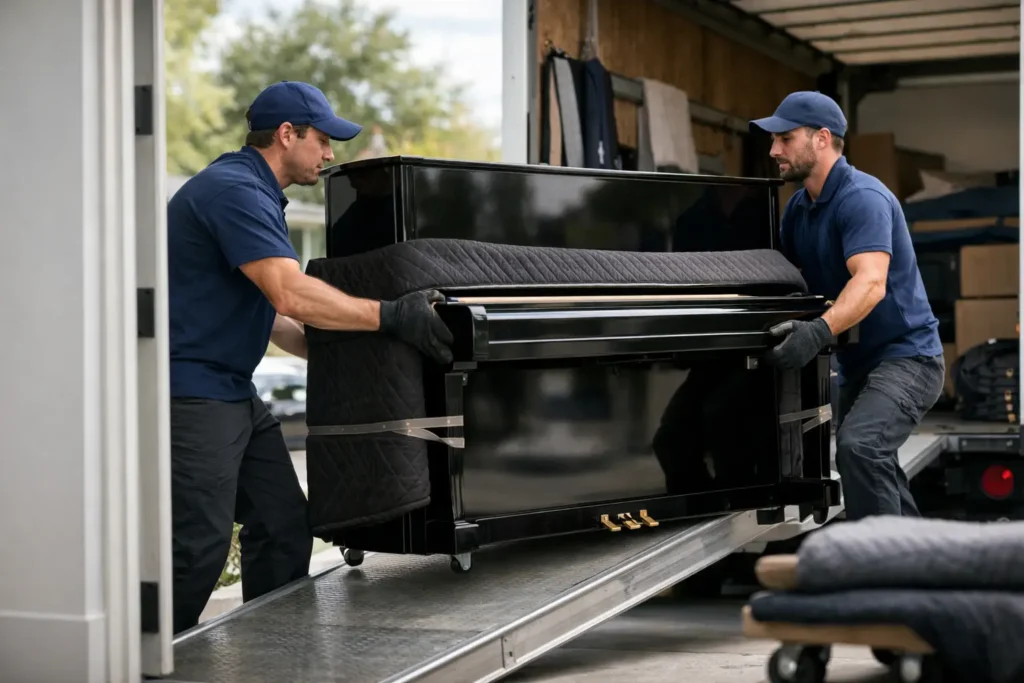
A piano is not just another heavy piece of furniture. Its weight is uneven, its finish can mark easily, and its internal mechanism can be affected by knocks, vibration and changes in humidity. This piano moving guide is designed to help you plan ahead, protect your instrument and know when specialist help is the safest choice.
Whether you are moving an upright from a family home in Ipswich, relocating a grand piano between properties, or putting a treasured instrument into storage, good preparation makes a real difference. The goal is simple: no rushed lifting, no guesswork at stairs, and no unnecessary risk to people, walls, floors or the piano itself.
Piano Moving Guide: Start With the Right Plan
The first step is identifying exactly what kind of piano you have. An upright may look manageable, but many weigh between 180 and 300 kilograms. Older models can be heavier again. A baby grand or grand piano has a different weight distribution and usually needs partial disassembly before transport.
Measure the piano at its widest, tallest and deepest points. Then measure every doorway, hallway, lift, gate and turn between its current position and the truck. Do not forget the path outside. Narrow side access, loose gravel, steep driveways, wet grass and uneven steps can all change the moving plan.
It also helps to consider where the piano will sit at the new property. Check that the route from the truck to the room is clear before moving day. Remove boxes, pot plants, outdoor furniture and anything else that could become a trip hazard. If the piano is going upstairs or onto a raised deck, professional assessment is strongly recommended. The issue is not only getting it up there, but whether the stairs, landing and access can safely handle the load.
Take a few clear photos of the piano and difficult access points when arranging your move. Images of staircases, tight corners and driveway gradients allow a removalist to organise the right equipment and crew from the outset.
Why a Piano Needs Specialist Handling
Pianos are awkward because their weight is concentrated in particular areas. On an upright, the cast-iron plate and internal frame make the body much heavier than it appears. On a grand piano, the weight sits largely in the curved side and plate, rather than being evenly spread across the case.
Trying to move one with a standard furniture trolley or a few willing friends can lead to serious injury or costly damage. A piano can shift suddenly, especially on a slope or step. Wheels fitted to some upright pianos are not designed for rolling across a house or driveway. They are generally decorative or intended only for tiny adjustments on a level surface.
A specialist piano move typically involves a purpose-built piano trolley or skid board, heavy-duty straps, padded covers, floor protection and a vehicle set up to secure the load. The crew must work together, communicate clearly and move at a controlled pace. This is one job where speed should never be the priority.
For grand and baby grand pianos, trained movers may remove the legs and pedal lyre, protect each component separately, and secure the piano body to a board. This work needs careful handling. Incorrect disassembly can damage fittings, put pressure on the case or leave the instrument unstable.
Prepare Your Piano Before Move Day
You do not need to dismantle the piano yourself. In fact, it is usually better not to. You can, however, make the move smoother by preparing the surrounding area and the instrument properly.
Start by removing loose items from the top of the piano, including lamps, sheet music, framed photos and ornaments. Empty the piano stool as well. If it has a hinged lid or loose music stand, let the movers know so they can secure it appropriately.
Close and lock the keyboard lid if your piano has a lock. If not, it should be kept shut and protected during transport. Never tape directly onto polished timber, painted surfaces or veneer. Adhesive can lift finishes or leave marks that are difficult to remove.
Clear a wide working path around the piano. Move rugs that can slide, and make sure children and pets are safely out of the way while loading takes place. If your property has delicate timber floors, tiled areas or light-coloured carpet, mention this before the move so suitable protection can be organised.
Outdoor conditions matter too. Queensland weather can change quickly, and rain creates a slipping hazard as well as a moisture risk for the piano. A professional crew can work around light weather when conditions are safe, but severe rain or unsafe surfaces may call for a different approach. Protecting people and the instrument comes first.
Protecting Floors, Walls and the Piano
Most piano damage happens at pinch points: door frames, corners, stairs and transitions from inside to outside. Proper padding is essential, but it is only part of the job. The piano must also be positioned, lifted and guided correctly.
Removal blankets and fitted covers protect the cabinet from scratches and minor knocks. Corner protection and straps help keep coverings in place without putting pressure on delicate parts. For homes with timber, vinyl or tiled floors, runners and boards can reduce the risk of scuffs, chips and concentrated weight damage.
The piano should remain upright unless the moving method for that specific instrument requires otherwise. Laying an upright on its side without appropriate support can place unnecessary strain on its cabinet and internal parts. A grand piano, by contrast, is generally transported on its side only after it has been properly prepared and secured.
Once loaded, the piano needs to be anchored firmly in the truck. It should not travel loosely beside ordinary household furniture. Sudden braking, roundabouts and uneven roads can shift a poorly secured load, even over a short local distance.
Stairs, Tight Access and Other Tricky Situations
Some moves need more than muscle. Tight turns, flights of stairs, split-level homes and balcony access require a clear method before anyone starts lifting. A crew may need additional equipment, extra hands or a different route altogether.
Be upfront about access when booking. A last-minute discovery that a piano must go down a steep external staircase creates delays and can make the move less safe. The same applies to apartment buildings. Confirm loading bay access, lift dimensions, building rules and whether a lift can be reserved.
Storage also needs planning. A piano should be kept in a clean, dry and stable environment, away from direct sunlight, dampness and major temperature swings. Avoid placing heavy items on top of it, and do not store it against a wall that is prone to moisture. If you are moving between homes, a suitable storage option can take pressure off a rushed settlement or handover date.
After the Piano Is Delivered
Once the piano is in its new position, give it time to settle before arranging a tuning. Transport and a new environment can affect tuning, even when the move has been handled carefully. As a general guide, allow a couple of weeks for the instrument to adjust to the temperature and humidity of its new room before calling a piano technician.
Choose its permanent position with care. Keep it away from direct sun, air-conditioning outlets, heaters, exterior doors and damp walls where possible. A stable internal wall is often a better choice than a spot beside a large window or frequently opened door.
Before the movers leave, inspect the cabinet, pedals, keys and stool. If anything needs attention, raise it straight away while the details of the delivery are clear. Then enjoy the best part of moving a piano: hearing it played again in a new home.
For a move involving stairs, difficult access or a treasured instrument, experienced handling is worth arranging early. Springall Movers can help plan the practical details so your piano is moved with the care it deserves and you can focus on settling in.