
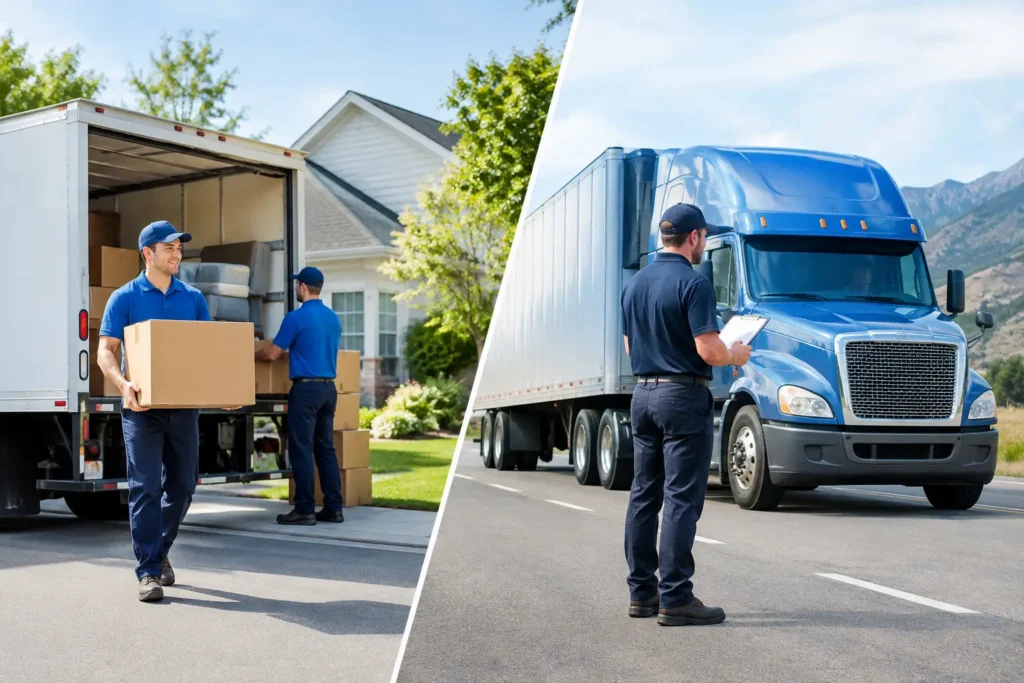
The difference between local movers versus interstate specialists becomes very real when your front door closes, the truck pulls away and your belongings still have hundreds or thousands of kilometres to travel. A move across town can often be completed in a day. A move across state borders needs a plan that holds together from collection through to delivery.
Neither option is automatically better. The right removalist depends on where you are going, how much you are moving, what needs extra care and how much certainty you need around timing. The goal is simple: your belongings should be handled respectfully, travel safely and arrive in the same condition they left.
Local movers versus interstate specialists: what changes?
A local move generally stays within the same city or surrounding region. The crew can usually collect, transport and unload in one continuous job. Familiarity with local streets, busy school zones, steep driveways, apartment access and parking conditions can make a practical difference on moving day.
An interstate move has more moving parts. It may involve a longer transport window, planned rest breaks, depot handling, a shared load or delivery arrangements that need to fit a route. The removalist must coordinate the full journey, not just the loading and unloading. That is why experience with long-distance planning matters as much as strength and a well-packed truck.
A locally owned removalist can still be well equipped for interstate work. In fact, a team that understands your starting point and also manages the long haul can offer a more personal point of contact. What matters is whether they have a clear process for the specific move you are planning.
What local movers do best
For a house move within Ipswich or to a nearby suburb, local knowledge helps remove small frustrations that can slow the day down. A crew that knows the area can plan around access, travel time and loading conditions rather than treating your address as a pin on a map.
Local movers are often a good fit when the move is straightforward, the destination is close and you need a team that can respond to the details of the property. This includes lifts and stairwells, narrow hallways, limited driveway access, heavy furniture or a piano that needs careful manoeuvring. Good local removalists do not rush these details. They assess them early and bring the right people and equipment for the job.
Local service can also feel more accountable. You are dealing with a team that works in the community, relies on its reputation and understands that a calm, organised move is what customers remember. That approach matters whether you are moving a unit, a family home, a small office or items into storage.
Where interstate specialists earn their place
Interstate relocations need transport capability, scheduling discipline and consistent communication. Your items may be travelling from Queensland to Victoria, the Sunshine Coast, Northern New South Wales or another destination where a same-day handover is not realistic.
A capable interstate removalist plans for the whole chain of custody. They should explain the expected collection and delivery process, how goods are secured for travel, whether your move is direct or part of a scheduled run, and who will be responsible if plans need to change. Long-distance moves leave less room for vague answers.
They should also understand how different belongings behave in transit. Cartons need to be packed so they can be stacked safely. Furniture needs proper protection from rubbing and movement. High-care items such as pool tables, spas and pianos may need a separate handling plan rather than being treated like ordinary household goods.
Choose based on the move, not the label
The labels can be misleading. Some removalists focus only on local work. Others operate only on interstate routes. But many established teams can handle both, provided they have the vehicles, systems and experience to do so safely.
Start with the nature of your move. If you are relocating a few suburbs away, local route knowledge and efficient on-the-day service may be your main priorities. If you are moving to another state, look closely at delivery planning, packing standards, transit protection and communication while your belongings are on the road.
The size and complexity of the move also matter. A one-bedroom unit with flexible timing has different needs from a four-bedroom home with children, pets, storage items and a fixed settlement date. An office relocation has another set of pressures, including keeping downtime to a minimum and protecting files, electronics and equipment.
Ask the removalist to talk through your move in plain language. A dependable team will want to know about access at both properties, large or fragile items, packing needs, storage requirements and your preferred dates. If the conversation stays focused only on a basic truck booking, they may not be looking at the whole job.
Packing matters more over long distances
Packing is one of the clearest differences between a short local relocation and an interstate journey. On a local move, some customers choose to move lighter items themselves or pack quickly because everything will be unpacked that afternoon. For a longer trip, boxes and furniture need to withstand more handling, more kilometres and more time in transit.
This does not mean every interstate move requires a full packing service. It does mean you should be realistic about what needs professional protection. Fragile kitchenware, artwork, mirrors, electronics and awkwardly shaped items are common trouble spots. Furniture blankets, wrapping, secure loading and sensible stacking all work together to prevent avoidable damage.
Before packing begins, separate anything you will need immediately at the other end. Keep essential documents, medication, chargers, keys, a change of clothes and children’s comfort items with you. This small step can make the first night in a new home far less stressful.
Do not overlook access and timing
The road between two homes is only part of the job. Access at each end can determine how smoothly a move runs. Let your removalist know about stairs, lifts, loading docks, tight turns, long carries from the truck, driveway gradients and any building rules. Photos can be useful where access is unusual.
Timing deserves the same attention. Settlement dates, key collection, lease handovers and workplace opening hours can all affect when a move can be completed. With interstate work, build a little flexibility into your plans where possible. Weather, road conditions and long travel distances are real factors, even with careful scheduling.
For businesses, a staged relocation may be the safest approach. Moving non-essential stock or archived files first can reduce pressure when it is time to transfer desks, IT equipment and daily operations. A removalist who listens to your operational needs can help keep the disruption manageable.
Questions worth asking before you book
Whether you choose a local team or an interstate-focused service, clear questions help you compare the quality of support on offer. Ask how your belongings will be protected, who will handle the move from collection to delivery, what happens if access changes, and how the team manages large or delicate items.
It is also sensible to ask about insurance and what cover applies to your particular move. Read any paperwork carefully, declare high-value or unusual items and make sure you understand your own responsibilities around packing, access and item condition. Honest expectations protect everyone.
At Springall Movers, the focus is on making the plan fit the move, rather than forcing your move into a one-size-fits-all process. That means looking at the practical details early, communicating clearly and treating every item with care.
The best choice is the removalist that gives you confidence before moving day arrives. Look for clear answers, careful planning and a team that takes your home or business seriously. When the right people are handling the job, the distance matters far less than the care taken at every stage.