
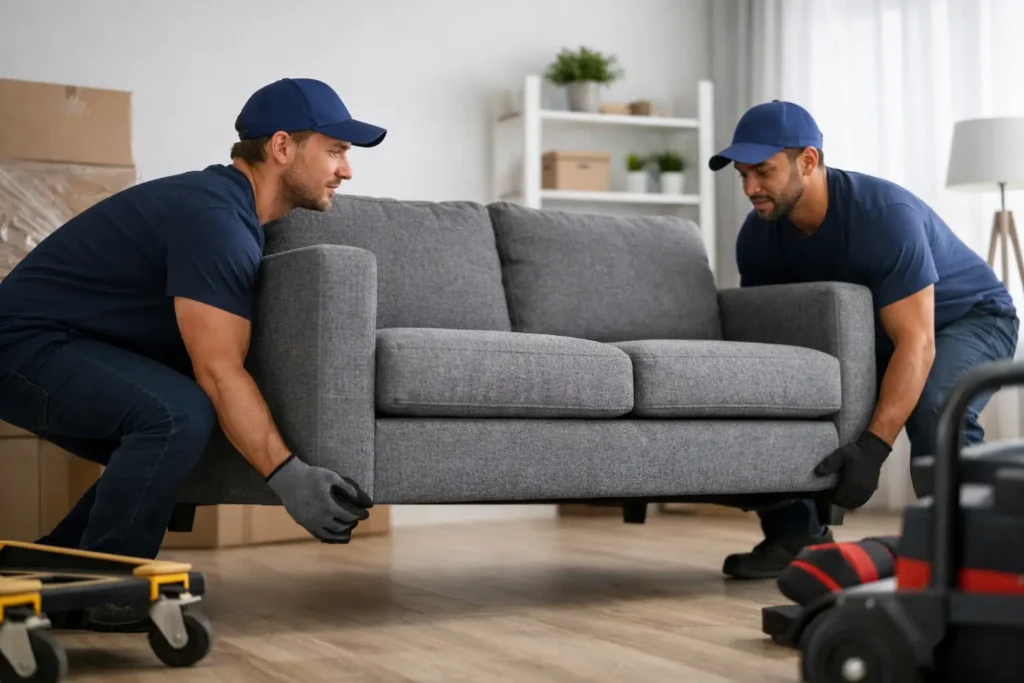
That oversized sofa always seems manageable until it meets a narrow hallway, a stair landing or a doorway that suddenly feels too small. If you’re wondering how to move heavy furniture without hurting yourself, damaging your walls or turning moving day into chaos, the answer is usually slower, smarter preparation – not more force.
Heavy furniture moves go wrong when people rush, lift awkwardly or underestimate how much planning matters. A solid timber dining table, a fridge, a filing cabinet or a piano all need a different approach. The safest move is often not about strength at all. It’s about space, equipment, teamwork and knowing when a job has crossed the line from doable to risky.
How to move heavy furniture without damage
Before you touch a single item, clear the path properly. That means removing rugs that can bunch up underfoot, opening doors fully, checking gate access and moving small obstacles out of the way. Measure the furniture and the spaces it needs to pass through, including door frames, stairwells, lifts and tight corners. A piece that fits in theory can still be difficult once you factor in hand position, turning room and the need to keep it level.
It also helps to think in stages. Are you moving the item across one room, into a truck, down a flight of stairs or into storage? Each part changes the method. A chest of drawers that is simple to slide across polished floors becomes a different job entirely once there are steps involved.
Protection matters just as much as movement. Use moving blankets, towels or thick pads to wrap timber edges, glass panels and corners that could chip. Floor protection is worth the effort too, especially on timber, tile and vinyl. A scratched floor is an easy mistake to make when a heavy item shifts unexpectedly.
Empty it, lighten it, secure it
Most heavy furniture becomes safer to move once you strip it back. Remove drawers from tallboys and desks, take shelves out of bookcases and empty cabinets completely. If a table has detachable legs, take them off. Bed frames, modular lounges and office desks often break down faster than people expect, and doing that work upfront can save a lot of strain later.
Anything that opens should be secured before moving. Tape drawers and doors shut lightly if needed, or better still, remove loose parts and transport them separately. The goal is to avoid sudden movement while carrying. When weight shifts mid-lift, that’s when hands get trapped, corners hit walls and backs take the load.
Use the right gear
The right equipment changes everything. Furniture dollies are excellent for heavy, boxy pieces on flat ground. A hand trolley works well for appliances and tall items if they’re strapped securely. Shoulder straps can help share weight, but they only work when the item is balanced and everyone using them knows what they’re doing.
Sliders are useful inside the house, particularly on carpet or hard floors, but they are not a solution for every surface. On some floors they glide beautifully. On others they catch or drift. Test them first with a controlled push instead of committing the whole load and hoping for the best.
Gloves improve grip, and proper enclosed shoes are non-negotiable. Socks, thongs and bare feet are an accident waiting to happen on moving day.
The safest lifting technique
If an item genuinely needs lifting, keep the load close to your body and lift with your legs rather than your back. Bend at the knees, brace your core and avoid twisting while carrying. If you need to turn, move your feet instead of rotating through your spine.
This sounds simple, but the real issue is usually awkward shape rather than weight alone. A light but bulky wardrobe can be harder to control than a compact timber cabinet. If your grip is poor, your vision is blocked or you have to lean sideways to compensate, stop and reset.
Communication matters when two or more people are carrying. One person should call the move, especially on stairs, corners and uneven ground. Short, clear instructions like stop, lower, tilt left or rest are far better than everyone talking at once.
Stairs, corners and tight spaces
Stairs are where caution needs to go up another level. The person at the lower end usually carries more weight, so swaps and rests should be planned, not improvised halfway down. Keep stairs clear, well lit and dry. If there is any doubt about control, don’t attempt it without proper equipment and enough experienced hands.
Corners are often solved with angles, not force. Tilt a sofa onto its end if the design allows it. Rotate a table top vertically. Remove doors from hinges if a few extra centimetres will make the difference. Sometimes a furniture item needs to come out in a completely different orientation from how it sat in the room.
For office moves, heavy cabinets and workstations can create extra risk because of hard flooring, confined access and the pressure to move quickly. The same rule applies – slow down, measure properly and dismantle where practical.
When not to do it yourself
There is a point where DIY stops being sensible. Very heavy items, expensive pieces, awkward stair access and specialist furniture all increase the chance of injury or damage. Pianos, pool tables, large fridges, stone tops, spa components and oversized commercial furniture are not items to wing on the day.
It also depends on who is available to help. A reliable team of capable adults with the right gear is very different from one person doing most of the work while others try to steady from the side. If you don’t have enough people, enough time or the correct equipment, the risk climbs quickly.
For many households and businesses, the real value of professional movers is not just muscle. It’s knowing how to protect difficult items, navigate tricky access and keep the move organised. That can make a big difference when timing is tight or the furniture has genuine sentimental or replacement value.
Common mistakes that cause damage
One of the biggest mistakes is dragging furniture without checking the surface underneath. Grit caught under a leg can leave long scratches in seconds. Another is lifting from weak points such as chair arms, thin table edges or detachable tops. Furniture is only strong in the places it was designed to carry weight.
Rushing is another common problem. People often try to finish the last few items quickly once the truck is nearly loaded, and that’s when concentration drops. The heaviest piece at the end of a long day is often the one that causes trouble.
Then there’s underestimating the weather. Rain makes paths slippery, and heat adds fatigue faster than most people expect. In Queensland conditions, even a short carry from the front door to the truck can become harder if the driveway is slick or the sun is relentless.
A practical plan for moving day
A calm move starts before the lifting does. Set aside the heavy items first so you know which jobs need two people, which need a trolley and which need to be dismantled. Keep tools handy for removing legs, shelves and doors. Have blankets, straps and tape ready before the furniture starts moving.
Load strategically. Heavier items usually go in first so they can be secured and won’t crush lighter pieces later. Leave enough room to manoeuvre inside the truck rather than packing the first section too tightly. If you’re moving both household and office furniture, separate fragile and high-use items so unpacking is easier at the other end.
If you’re in Ipswich or moving further afield, local knowledge can help more than people think. Narrow access points, sloping driveways and older homes with tight internal layouts all affect how heavy furniture should be handled. That’s part of why organised planning matters just as much as manpower.
At Springall Movers, we see the same thing time and again – the safest moves come from clear preparation, careful handling and knowing when to get help for the difficult pieces.
Heavy furniture doesn’t reward bravado. It rewards patience, the right setup and a bit of honest judgement about what you can handle safely. If you approach it that way, moving day is far less likely to leave you with a damaged table, a sore back or a story you wish you didn’t have.