
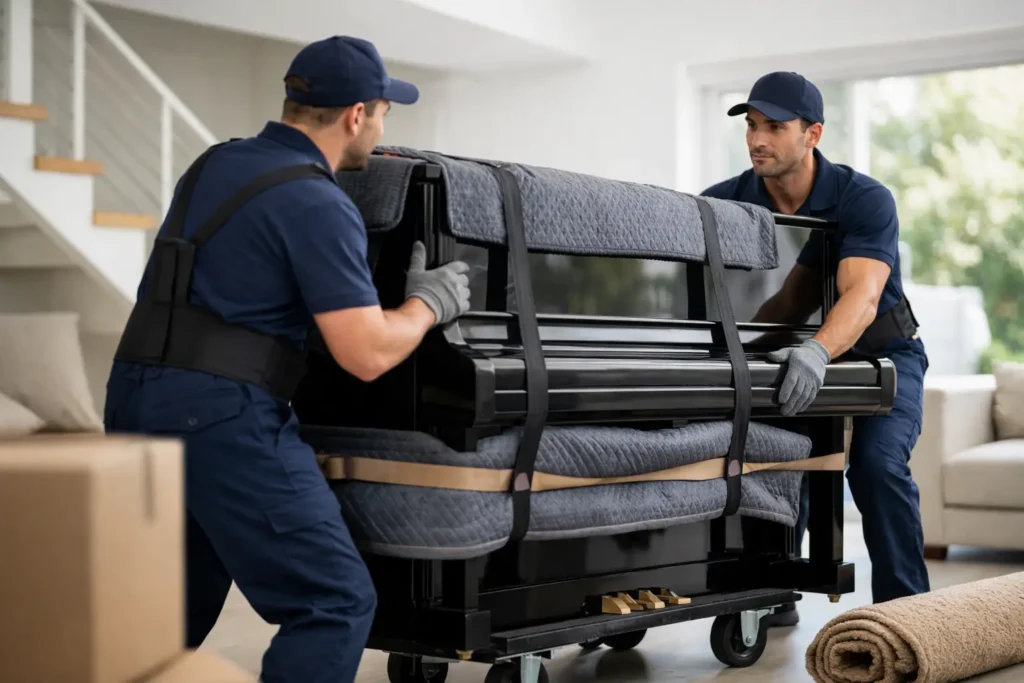
A piano is one of the hardest household items to move well. It is heavy, awkward, easy to damage, and far more delicate than it looks. If you are working out how to move a piano safely, the biggest mistake is treating it like a large piece of furniture. It is really a musical instrument with a heavy frame, fine internal parts, and a polished exterior that marks easily.
That is why piano moves need a different level of planning. Whether you are shifting an upright across town or trying to get a baby grand through a tight doorway, safety comes down to preparation, equipment, and knowing when the job is simply too risky to do yourself.
How to move a piano safely starts with the right call
Before anyone lifts a thing, stop and assess the piano itself. Upright pianos, console pianos, baby grands and grand pianos all have different shapes, weights and balance points. An upright may seem manageable because it takes up less floor space, but it can still weigh several hundred kilos. A grand piano spreads its weight differently and often needs partial disassembly before transport.
The path matters just as much as the instrument. A flat run from one room to a driveway is very different from a move involving stairs, narrow hallways, uneven ground, lifts or a sloping driveway. Even one difficult turn can change the whole plan.
This is usually the point where people realise the real question is not just how to move a piano safely, but whether they should move it themselves at all. If there are stairs, tight access, fragile flooring, or any uncertainty about lifting technique, professional help is usually the safer option for both the piano and the people moving it.
What makes piano moves risky
A piano’s weight is not evenly distributed. In many models, most of the weight sits in one section, which can cause sudden tipping if the load shifts. Add smooth casters, polished timber and narrow grip points, and it becomes clear why pianos are notorious for slips and crush injuries.
There is also the issue of internal damage. The outside might survive a rough trip with only a scratch or two, but inside, the action, strings, pedals and soundboard can all be affected by impacts and poor handling. A piano that arrives looking fine may still need repairs or extensive retuning if it has been jolted too hard.
Then there is your home. Door frames, stair rails, timber floors, tiles and walls are all at risk during a piano move. A rushed attempt can turn one difficult item into a long list of repairs.
The equipment you actually need
Trying to move a piano with nothing more than a few strong mates is where problems start. Safe piano transport depends on the right gear, not just brute force.
At a minimum, you need heavy-duty moving blankets, strong straps, a piano trolley or suitable dolly, non-slip gloves, and a vehicle that can secure the load properly. Depending on the layout, you may also need ramps, skid boards, floor protection and tie-down points inside the truck.
For grand and baby grand pianos, there is often an added step. The legs and pedal lyre may need to be removed and packed separately so the body can be wrapped, supported and loaded in a stable position. That is not a job to guess your way through.
Preparing the piano before the move
Start by closing and locking the keyboard lid if the piano has a lock. If it does not, secure it carefully so it cannot fly open. The top lid and any moving panels should also be fastened or wrapped to prevent shifting in transit.
Next, wrap the piano fully with moving blankets. This is not just to protect the finish. The blankets also help reduce minor impact during handling and give straps a better surface to grip. Avoid taping directly onto polished timber, as adhesive can damage the finish.
If you are moving an upright, keep it upright. Tilting it too far can place stress on internal components and make it harder to control. If you are moving a grand, follow the proper disassembly process before attempting to lift or load it.
It is also smart to measure everything in advance. Measure the piano, then measure doors, hallways, corners, gates and the truck opening. Guesswork is what turns a simple move into a stuck piano halfway through a doorway.
Moving a piano through the house
This stage is where most damage happens. The move from inside the house to the truck often involves the tightest spaces and the most awkward angles.
Clear the route completely before you begin. Remove rugs, pot plants, side tables, toys and anything else that could create a trip hazard or force a sudden change in direction. If the weather is wet, think about traction on outdoor paths and driveways as well.
One person needs to lead the move and call directions. Too many voices create hesitation, and hesitation under load is dangerous. Keep movements slow and controlled. If the piano is on a trolley, strap it firmly so it cannot roll or shift unexpectedly. When moving over thresholds, ramps or uneven surfaces, take extra care to support the weight rather than letting momentum take over.
Stairs are the point where DIY piano moves most often go wrong. Even a short flight adds serious risk because the weight can run away from you in seconds. If stairs are involved, it is usually best to hand the job over to experienced movers with the right equipment and enough trained people on site.
Loading and transporting the piano
Once the piano reaches the truck, the job is only half done. Loading needs to be controlled and deliberate. A proper ramp and secure tie-down points are essential. The piano should never be left free-standing in the vehicle.
Upright pianos are generally transported in an upright position and secured against the wall of the truck. Grand pianos are secured according to their frame and packing setup. In both cases, movement inside the truck must be minimised. Even small shifts during braking or cornering can cause serious damage.
Driving style matters too. Harsh braking, quick turns and rough roads can all affect the piano, especially on longer trips. That is one reason many people choose a removalist with experience handling specialty items rather than relying on general moving methods.
When professional piano movers are the safer choice
There is no prize for doing a piano move the hard way. If the instrument is valuable, sentimental, unusually large, or difficult to access, professional movers are often the most sensible option.
A trained team will usually begin with an assessment of the piano type, access points and any site-specific risks. From there, they can bring the right equipment, enough hands for the lift, and a transport plan that reduces the chance of damage. That matters even more for interstate moves, office relocations, or homes with stairs and narrow entries.
For local families and businesses, working with a removalist that already handles specialty items can remove a lot of uncertainty. Springall Movers, for example, approaches piano transport with the same care and planning used for other high-risk items – because safety is not something to leave to chance on moving day.
After the piano arrives
Once the piano is delivered, place it carefully in its new position before removing wraps and straps. Avoid pushing it across the floor without proper protection, particularly on timber, vinyl or tile.
Give the piano time to settle before arranging a tuning. Changes in temperature, humidity and movement can affect the instrument, so it is normal for tuning to be needed after relocation. That does not necessarily mean the move went badly. It is simply part of how pianos respond to a new environment.
If you notice external marks, loose parts, sticking keys or pedal issues, inspect them early rather than waiting. Small problems are easier to address when spotted straight away.
The common mistakes to avoid
Most piano moving problems come back to the same few errors. People underestimate the weight, overestimate how many helpers they really need, skip the proper gear, or rush because they want to get the move finished quickly.
Another common mistake is assuming a trolley solves everything. A trolley helps on flat ground, but it does not remove the need for control, balance and a clear path. The same goes for wrapping. Blankets protect the finish, but they do not make a poor lifting plan safe.
And then there is the temptation to “just get it through” when access is tight. That is when walls get gouged, hands get crushed, and pianos get dropped. If a move feels wrong halfway through, stop and reassess rather than forcing it.
A piano move does not need to be dramatic, but it does need respect. The safest moves are the ones planned properly, handled patiently, and passed on to professionals when the risks start to outweigh the convenience. If you treat the piano as the specialised item it is, you give yourself the best chance of getting it to its new home in one piece.