
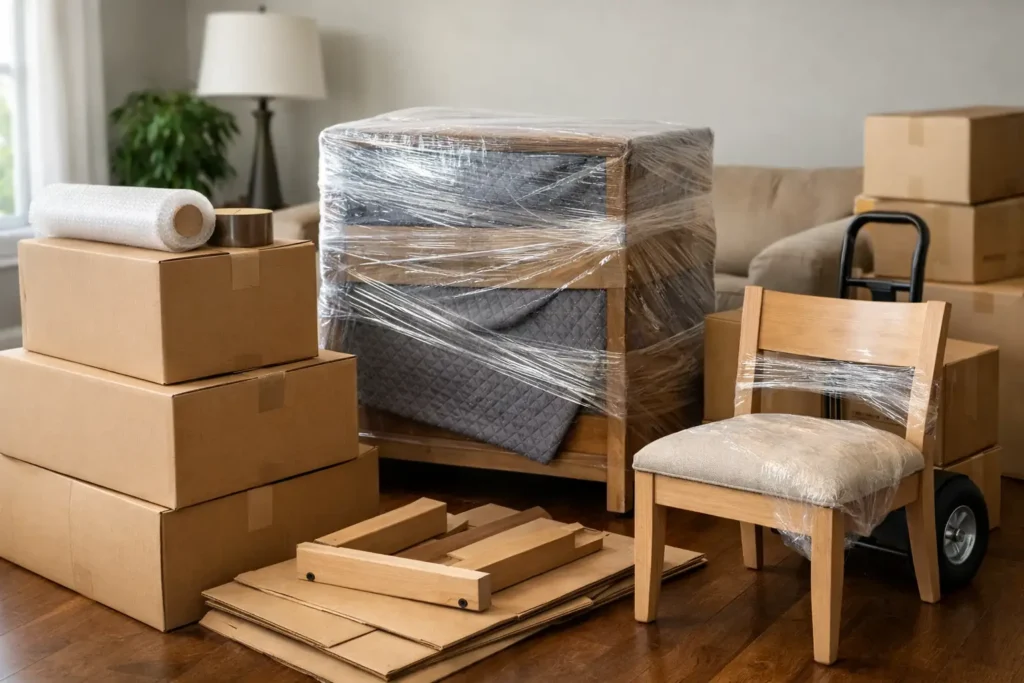
That flat-pack shelf looked sturdy enough until moving day, when one weak box and a sharp corner turned it into a scratched mess. Choosing the best moving boxes for furniture is less about buying the thickest carton on the shelf and more about matching the right box to the piece, the weight, and the distance it needs to travel.
If you are packing for a local move or sending furniture further afield, the box matters because furniture is awkward. It is often bulky, heavy in odd places, and easily damaged at corners, legs, glass panels and polished surfaces. The right packing approach saves time, helps avoid damage, and makes the whole move easier to manage.
What makes the best moving boxes for furniture?
A good furniture box does three jobs well. It carries weight without collapsing, it protects surfaces from knocks and rubbing, and it keeps pieces stable so they do not shift around in the truck.
That means the best option is not always a standard moving carton. For smaller furniture parts, double-walled boxes are usually the safest choice because they hold shape better and cope with stacked loads. For larger or unusual items, adjustable cartons, picture boxes, mirror packs and purpose-sized cartons often do a much better job than trying to force everything into one oversized box.
It also depends on the furniture itself. A bedside table with removable drawers needs a different packing method from a dining chair, and both are very different from a dismantled entertainment unit. The best box is the one that fits closely enough to limit movement without putting pressure on fragile edges.
The main box types worth using
Standard moving cartons still have their place, especially for furniture hardware, loose cushions, light shelves and dismantled parts. But when people run into trouble, it is usually because they rely on one carton type for everything.
Book cartons for heavy parts
Book cartons are small, compact and surprisingly useful for furniture moves. They are ideal for dense items such as metal fittings, brackets, bolts, castors and small timber components. Because they are smaller, they are less likely to become too heavy to lift safely.
They are also handy for drawer contents if you are emptying a chest before transport. A larger carton may seem more efficient, but once loaded with heavy contents it quickly becomes hard to handle and more likely to split.
Tea chest cartons for lighter, bulky items
Tea chests suit lighter pieces that take up space without carrying too much weight. Think cushions, removable fabric covers, lightweight shelving, lamp shades or soft furnishings from around larger furniture. They are useful, but only when packed with care.
The trade-off is that people often overfill them or use them for items that are too heavy. A tea chest full of dense furniture parts is asking for trouble. Save these boxes for bulk, not weight.
Porta robes and wardrobe boxes
Wardrobe boxes are not only for clothes. They can also help with delicate upholstered dining chair covers, removable fabric pieces and padded items that crease or pick up dust easily. If a furniture piece includes hanging textiles or soft protective coverings, a porta robe can keep them cleaner and easier to unpack.
They are not a solution for solid furniture, but they can protect the soft parts that often get forgotten until they arrive marked or dirty.
Picture and mirror cartons
If your furniture includes glass doors, mirrored panels or framed inserts, picture and mirror cartons are worth using. Glass is one of the easiest things to underestimate during a move because the surrounding furniture frame can make it look safer than it is.
These cartons are designed to adjust around flat fragile items and provide better edge protection than a standard box. For cabinets, display units or dressing tables with mirror sections, this extra protection can make a real difference.
Adjustable furniture cartons
For larger dismantled furniture pieces, adjustable cartons are often the most practical option. They are made to telescope or combine around wider items such as table tops, flat shelves, bedheads or panels from modular furniture.
This is where the best moving boxes for furniture really show their value. A close fit means less movement in transit, and less movement usually means fewer chips, scratches and pressure cracks.
Furniture pieces that should not just be boxed and forgotten
Some furniture needs more than a carton. Boxing is only one part of the protection.
Tables and desks
If possible, remove legs and wrap them separately. The top should be protected with cardboard, moving blankets or padded wrap before it goes into an adjustable carton. Sharp corners need extra attention because they take the first hit during loading.
Chairs and stools
Dining chairs, office chairs and stools are often awkward rather than fragile. Stackable chairs may travel well with padding between each piece, while upholstered chairs need surface protection to prevent scuffs and snags. If legs are removable, boxing them separately can reduce the chance of breakage.
Bed frames
Bed frames are a common source of lost screws, scratched slats and damaged corners. Keep bolts and fittings in a labelled small box or sealed bag taped securely to a protected frame piece. Long rails and slats should be bundled neatly so they do not shift around.
Flat-pack and modular furniture
These pieces can be convenient to move when dismantled, but they are not always strong once taken apart and reassembled. Particleboard edges, cam locks and veneer surfaces can chip easily. Snug cartons, corner protection and careful stacking matter a lot here.
Packing materials matter as much as the box
The wrong packing material can undo the benefit of a good carton. Too little padding leaves the furniture exposed. Too much loose fill can let pieces move around anyway.
Cardboard sheets are useful for surface protection, especially on timber, laminate and stone-look finishes. Bubble wrap helps with fragile sections, but should not be the only line of defence on heavy furniture edges. Moving blankets are excellent for preventing rub marks, particularly during loading and unloading. Packing paper is handy for hardware and smaller fragile components.
Tape matters too. Cheap tape fails when cartons are under strain or exposed to heat. Reinforcing the base of each box before filling it is a simple step that prevents plenty of problems later.
Common mistakes when choosing furniture boxes
The first mistake is using boxes that are too large. Bigger sounds better, but oversized cartons make furniture parts harder to stabilise and easier to overload.
The second is reusing old cartons that have already lost their strength. If a box has softened corners, creases or water damage, it is not worth trusting with a timber panel or glass insert.
Another common problem is poor labelling. Furniture hardware packed into an unmarked carton can add frustration at the other end, especially if you are trying to rebuild beds, desks or shelving quickly.
People also forget that furniture rarely travels alone. The box that works in the spare room may not hold up once it is stacked in a truck beside heavier items. Packing for transport conditions, not just storage, is the safer way to think about it.
When professional packing is the better option
Some furniture is simply high-risk. Antique pieces, marble tops, glass cabinets, oversized lounges, pool tables and other specialty items need more than a trip to the box aisle. In those cases, the safest box may actually be part of a larger packing and handling plan.
That is where experienced movers can help. A local team such as Springall Movers sees every week which cartons hold up well, which items should be crated or padded instead of boxed, and how to protect furniture from both handling damage and transport movement.
If you are short on time, moving interstate, or dealing with heavy or sentimental pieces, getting the packing right from the start can remove a lot of stress.
How to choose the right box without overthinking it
Start with the furniture item, not the box. Ask three simple questions. Is it heavy? Is it fragile? Can it be dismantled?
If it is heavy, choose a smaller strong carton. If it is fragile, focus on edge and surface protection as much as the box itself. If it can be dismantled, separate the parts and pack each one according to shape and weight instead of trying to move the whole thing in one piece.
The best moving boxes for furniture are the ones that suit the job in front of you. That may mean book cartons for fittings, mirror cartons for glass panels, and adjustable cartons for larger flat sections. It is not fancy, but it is effective.
A good move rarely comes down to luck. It usually comes down to careful choices made before the truck arrives, and the box you pick is one of the simplest ways to protect the things you want to keep in good nick.