
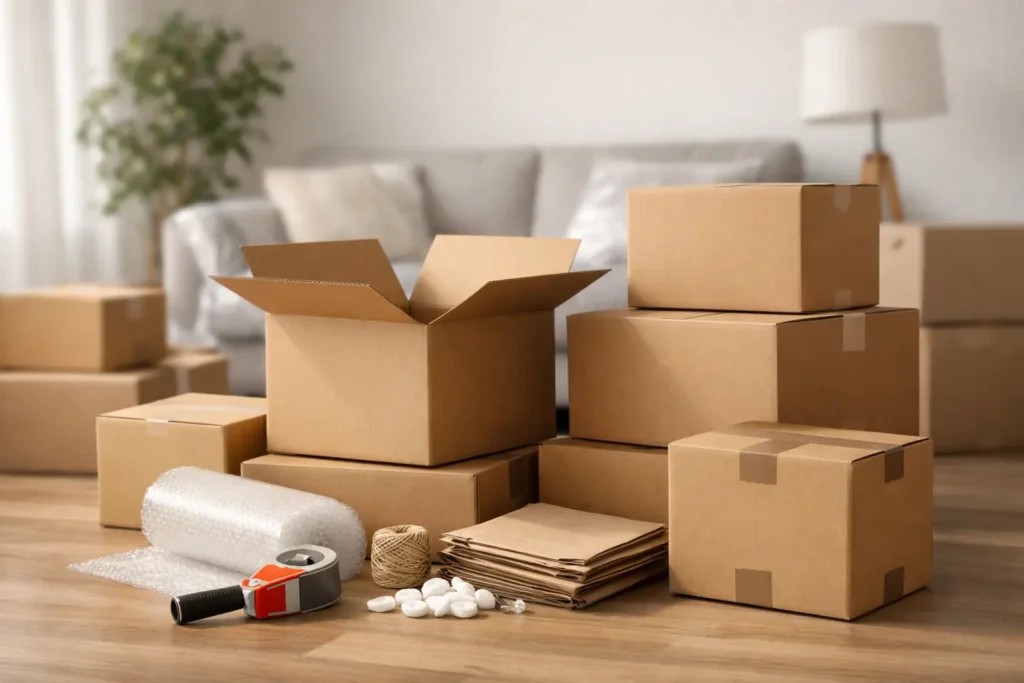
A box gives up at the worst possible moment – halfway down the path, in the back of the ute, or just as you lift it onto a stack. That is why choosing the right moving boxes matters more than most people expect. Good boxes protect your belongings, make packing faster and help the whole move run with less stress.
If you have ever packed a house in a hurry, you already know the temptation to grab whatever cartons are lying around. Sometimes that works for linen or soft toys. For books, kitchenware, electronics or office equipment, it usually creates trouble later. The better approach is simple – match the box to the item, pack it properly and avoid overloading it.
Why moving boxes make such a difference
A well-packed box does more than hold things together. It helps protect corners, spreads weight evenly and allows safer lifting. On move day, that matters for both your belongings and the people carrying them.
The wrong box creates problems quickly. If it is too big, heavy items sink and split the bottom. If it is too small, awkward items end up forced in at bad angles, which can damage both the box and what is inside it. If the cardboard is worn out or soft from moisture, even careful packing may not be enough.
There is also the practical side. Uniform moving boxes stack better in a ute or storage unit. They are easier to label, easier to carry and less likely to shift in transit. That kind of order saves time when a move is already busy enough.
Not all moving boxes are the same
People often talk about boxes as though one type suits everything. It does not. Different items need different levels of support, and getting that balance right can make packing much easier.
Small boxes for heavy items
Small boxes are the safest choice for dense items such as books, tools, pantry goods, paperwork and some kitchen items. The reason is straightforward – heavy things become difficult to lift very quickly. A large box full of books might seem efficient while packing, but it is rarely efficient when someone has to carry it.
Keeping heavy items in smaller moving boxes reduces strain and lowers the chance of the bottom giving way. It also helps when stacking, because a compact, solid box is less likely to crush under uneven pressure.
Medium boxes for everyday household items
Medium boxes are the workhorse of most moves. They suit toys, folded clothing, shoes, small appliances, décor and mixed household goods that are not especially fragile or especially heavy.
If you are unsure where an item belongs, medium is often the safest starting point. These boxes are usually easier to manage than oversized cartons, and they fit neatly into most loading plans.
Large boxes for light, bulky items
Large boxes are useful, but only when used carefully. They are best for doonas, pillows, cushions, lampshades and other lightweight items that take up space without adding much weight.
This is where people sometimes come unstuck. A large box invites overpacking. Once you start filling spare space with books, kitchen gear or random garage items, the box goes from handy to hazardous.
Specialty boxes for awkward or fragile items
Some belongings need more than a standard carton. Wardrobe boxes can keep hanging clothes together. Dish packs offer stronger walls for crockery and glassware. Picture boxes help protect framed art, mirrors and large flat items.
You do not need specialty moving boxes for every move, but they are worth considering for belongings that are difficult to replace or easy to damage. The trade-off is convenience versus necessity. For some households, standard boxes plus careful wrapping will do the job. For higher-risk items, a purpose-built box is the safer choice.
What to look for in a good box
The best box is not always the newest one, but it should still be strong, dry and structurally sound. If cardboard feels soft, smells musty or shows creases at the base, it may not cope with lifting and stacking.
Double-walled boxes are generally better for heavier or fragile contents because they provide extra strength. Single-walled boxes can still be useful for lighter household goods. What matters most is whether the box suits the load.
Check the corners and the bottom flaps before you pack anything. If the cardboard is already weakening, tape will only do so much. Strong tape reinforces a box – it does not rescue a poor one.
Cleanliness matters too. Reused boxes can be a sensible option, but avoid any with stains, food residue or signs of pests. Packing should reduce problems, not bring new ones into your home or storage space.
How to pack moving boxes properly
Even a good box can fail if it is packed carelessly. Start by taping the base well, using enough tape to support the weight inside. Then build a stable base with heavier items at the bottom and lighter ones on top.
Fill gaps so contents do not rattle around in transit. That might mean butchers paper, packing paper, linen or other cushioning materials. Empty space is where movement starts, and movement is often what causes chips, cracks and scuffs.
Try to keep each box at a manageable weight. There is no perfect number that suits every person, but if a box is hard to lift while you are packing it, it will not get easier later. A few more boxes are better than one overloaded carton.
Labelling is part of packing, not an afterthought. Mark the room, note if the contents are fragile and, where helpful, write a brief description of what is inside. This saves time on arrival and avoids the frantic search for the kettle, chargers or the kids’ school gear.
Common mistakes people make with moving boxes
The most common mistake is mixing heavy and fragile items in the same carton without enough support. A blender base, two hardback books and a set of wine glasses should not be sharing a box unless they are packed very carefully, and even then there are better ways to do it.
Another issue is relying too heavily on supermarket or retail boxes. Some are perfectly fine for a short move with light contents. Others are designed for one trip from shelf to stockroom and not much more. If the cardboard is thin or oddly shaped, packing becomes harder and stacking becomes less stable.
Overfilling boxes is another regular problem. When flaps cannot close flat, the box no longer stacks properly. Underfilling is not ideal either, because contents can shift too much during transport. The goal is firm, supported and easy to handle.
People also leave fragile items unmarked because they assume they will remember. On moving day, with dozens of boxes in play, memory is not a reliable system. Clear labels help everyone handle things with the right level of care.
When professional help makes packing easier
Packing sounds manageable until you are staring at the kitchen, the garage and three bedrooms worth of belongings a week before the move. That is when box choice, packing technique and time pressure all start colliding.
For some people, doing it all themselves is fine. For others, especially families, businesses or households managing a larger relocation, professional packing support can take a lot of pressure off. Fragile items, awkward pieces and high-use rooms like kitchens often benefit most from an experienced hand.
A local team that handles moves every day can usually spot risks before they become breakages. They know which moving boxes suit which items, how to stack for transport and how to keep the process moving without turning the house upside down. That is part of what makes a well-managed move feel calmer from the start.
A smarter way to think about boxes
Moving boxes are not just packing supplies. They are part of the system that keeps your move organised, protects what matters and makes lifting, loading and unloading safer. Choosing the right box will not solve every moving headache, but it does remove a lot of preventable ones.
If you are packing for an upcoming move, give yourself permission to be a bit more selective. Use smaller boxes for weight, larger boxes for bulk and stronger boxes where protection really matters. A little care at the packing stage can make the whole move feel more under control – and that is a good place to start.