
The sound that makes people stop mid-move is not a heavy box hitting the floor. It is that sharp little crack from inside a carton that was meant to be safe. A good guide to moving fragile items starts there – with the small decisions that prevent damage before the truck even leaves.
Fragile belongings are usually not the biggest things in the house, but they are often the hardest to replace. Glassware, framed art, mirrors, electronics, ceramics and sentimental pieces all need a different level of care. The safest move is not about wrapping everything in as much material as possible. It is about using the right packing method, the right box, and the right handling from start to finish.
Why fragile items get damaged during a move
Most breakages happen for predictable reasons. Items are packed in boxes that are too large, empty space is left inside cartons, or the weight is uneven from top to bottom. Sometimes the issue is not the road at all. It is the rush before moving day, when people mix fragile items with general household goods and hope for the best.
There is also a trade-off many people miss. Overpacking a box with heavy crockery can be just as risky as underpacking it. The box becomes harder to lift, more likely to be dropped, and more likely to split at the base. Good packing is about control, not just cushioning.
A practical guide to moving fragile items
Start by separating fragile belongings into categories. Kitchen glassware, artwork, electronics and decorative items should not be packed the same way. When you group similar pieces together, it becomes much easier to choose the right materials and avoid rushed decisions later.
Before packing anything, set up a clean workspace with sturdy cartons, packing paper, bubble wrap, tape and markers. If you are reusing old boxes, check the corners and base carefully. Soft, bowed or damp cardboard is a risk you do not need.
Use smaller boxes than you think you need
For fragile items, smaller cartons are usually safer. They are easier to carry, easier to stack and less likely to collapse under weight. This matters most for plates, bowls, mugs and glassware, which can become surprisingly heavy once packed properly.
A large box full of fragile kitchen items might seem efficient, but it often creates more pressure on the contents. Smaller, well-packed cartons give you better protection and more control on moving day.
Wrap items individually, then cushion the box
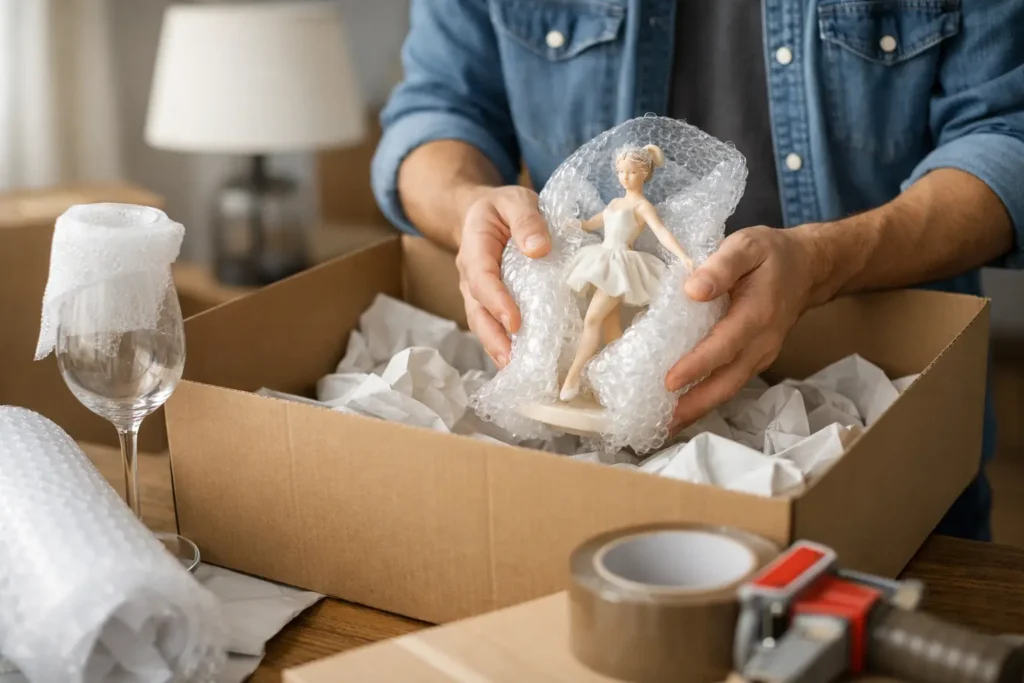
One of the most common mistakes is lining a box with soft material and then placing unwrapped items inside it. Every fragile piece should be wrapped on its own first. After that, use scrunched packing paper or similar cushioning on the bottom, sides and top of the box.
The goal is simple: nothing inside should shift when the box is gently moved. If you can hear movement, there is work left to do.
Fill empty space without crushing contents
Empty gaps are where breakages start. During transport, even careful driving involves vibration, cornering and stopping. Those small movements are enough to knock unprotected items together.
At the same time, stuffing too much material into a box can create pressure on delicate edges, especially on wine glasses, lamp bases and ceramics with handles. The fit should be firm, not forced.
How to pack common fragile items
Glassware and crockery
Wrap glasses individually and place them upright where possible, with cushioning between each piece. Plates and bowls are better packed on their edge rather than stacked flat, as this reduces pressure and makes them less likely to crack.
Heavier kitchen items should go at the bottom of the carton, but never in a way that crushes lighter pieces above. Keep boxes to a manageable weight. If lifting it feels awkward, split the contents across two cartons.
Mirrors, framed art and pictures
Flat items need edge protection as much as surface protection. Wrap the frame, protect the corners and use a box sized closely to the piece where possible. Large mirrors and artwork should never be left leaning unsecured in the truck, as a short shift in transit can crack glass or damage the frame.
For especially valuable or sentimental pieces, custom packing is often the safer choice. Some items are worth more than a standard DIY carton can protect.
TVs, monitors and electronics
Original boxes are ideal if you still have them, especially for televisions and computer screens. If not, use a sturdy carton that allows for padding around all sides without putting pressure directly on the screen.
Remove cords, remotes and accessories, then pack them together in a labelled bag or small box. Electronics do not just need protection from impact. They also need clear organisation so parts are not misplaced or tangled when it is time to set up again.
Lamps, ceramics and decorative pieces
Anything with protruding parts, such as lamp shades, handles or figurine details, needs extra care. Wrap the main body securely, then protect fragile points separately. Do not let oddly shaped items rattle around with other décor just because there is space in the box.
This is where patience matters. Decorative pieces are often damaged not because they are especially weak, but because they get packed last, quickly and without enough support.
Labelling matters more than people think
A box marked fragile is helpful, but it is not enough on its own. Add simple handling notes where needed, such as this side up or do not stack. The clearer the label, the easier it is for everyone moving the box to do the right thing.
It also helps to label by room and contents. A carton marked kitchen – glasses is far more useful than one marked misc. On a busy moving day, good labelling reduces mix-ups and cuts down unnecessary handling.
What to keep with you instead of loading on the truck
Some fragile items should travel separately in your own vehicle if possible. This usually includes jewellery, important documents, family heirlooms, small collectibles and anything irreplaceable. The reason is not that a moving truck is unsafe. It is that some items are too important to be mixed into the general load.
There is an it depends factor here. A professionally packed antique cabinet may be safer with trained movers than wedged into the back seat. But smaller valuables and highly personal items are often best kept close.
Moving day handling tips that prevent last-minute damage
Packing is only half the job. Fragile cartons still need sensible handling once the move begins. Boxes should be stacked securely, with heavier cartons underneath and delicate ones protected from pressure. Nothing fragile should be used to fill an awkward gap in the truck.
This is also where experience makes a difference. Specialty items such as pianos, pool tables and oversized mirrors need more than careful lifting. They need planning, the right equipment and enough people to move them safely. For households and businesses around Ipswich, that is often the point where calling in an experienced team saves both time and worry.
When professional packing is the better option
Some moves are straightforward enough to pack yourself. Others are not. If you are juggling work, kids, settlement dates or a long-distance relocation, fragile packing can easily become the task that gets rushed.
Professional packing is worth considering when you have a large volume of breakables, high-value items, or bulky pieces that are difficult to protect properly. It can also help when access is tricky, such as stairs, narrow hallways or tight apartment lifts. Careful packing is not just about materials. It is about knowing what can go wrong before it does.
Mistakes to avoid in any guide to moving fragile items
The biggest mistakes are usually simple ones: using weak boxes, skipping individual wrapping, leaving space inside cartons, overfilling boxes, and vague labelling. Another common one is assuming fragile means untouchable. Fragile items still need to be packed firmly enough to handle normal transport.
Rushing the final few boxes causes plenty of damage too. The last hour before a move is when people start packing random items together, taping up half-full cartons and hoping careful driving will make up for it. Usually, it does not.
If you want a safer move, think of fragile packing as part of the move plan, not the leftover task at the end. A bit more time at the packing table can save a lot of frustration when you open the first box in your new place.
When something matters to you, pack it as if the road is bumpy, the day is busy and the box will be handled more than once – because that is usually the reality, and good preparation is what keeps your belongings safe.
One Response