
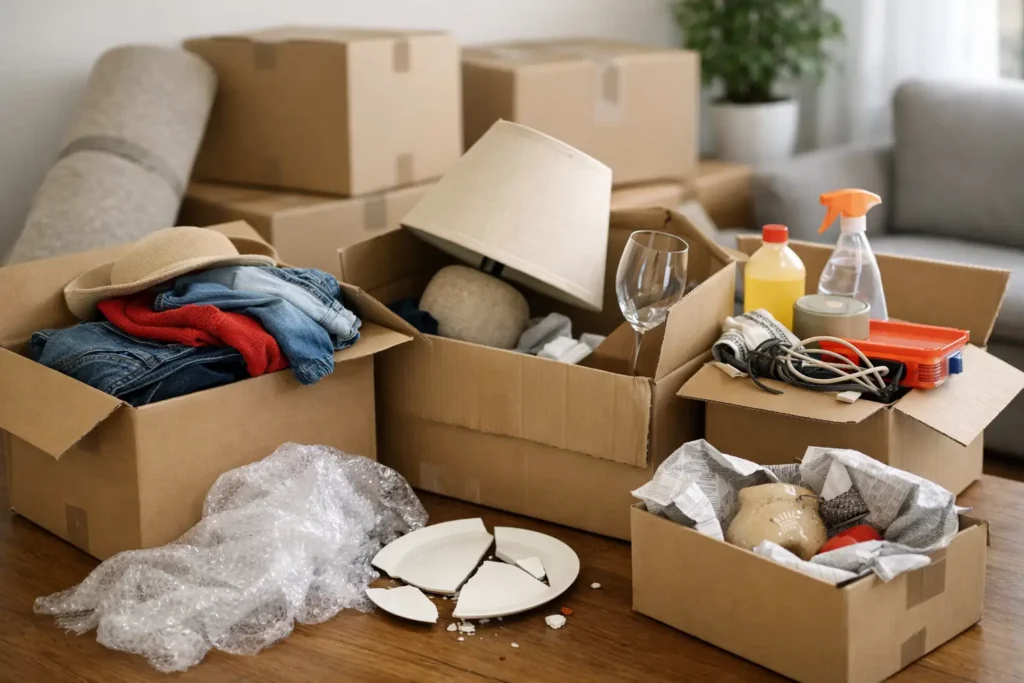
The trouble usually starts with one harmless thought: we’ll just pack as we go. A few days later, the kitchen is half-boxed, the cords are missing, the pantry is in shopping bags, and move day feels bigger than it should. Most packing mistakes during house move planning are not dramatic. They are small decisions that pile up until they cost time, energy and sometimes damaged items.
Good packing is less about perfection and more about control. When your boxes are packed with a bit of thought, the truck loads faster, fragile items travel better, and unpacking is far less painful. If you are moving locally or heading further afield, these are the mistakes that most often turn a straightforward move into a long day.
Why packing mistakes during house move planning cause bigger problems
Packing affects more than the boxes themselves. It changes how long the move takes, how safely things can be carried, and how quickly you settle into the new place. A box packed too heavy can split in the driveway. A box with no label can end up in the wrong room. A rushed carton of glassware can survive the first lift and break on the second.
That is why experienced movers pay attention to the details before loading starts. Packing mistakes rarely stay in one lane. They usually flow into delays, confusion and unnecessary stress.
1. Leaving packing too late
This is the most common problem because it feels manageable right up until it is not. People often underestimate how long it takes to sort cupboards, wrap breakables, clear drawers and make decisions about what is actually worth moving.
Late packing usually leads to mixed boxes, poor labelling and fragile items being wrapped in whatever is nearby. It also makes move day harder for everyone because there is no clear system. If you can, start earlier than feels necessary. Begin with the rooms and items you use least, then work towards the daily essentials.
If time is already tight, it helps to be realistic. Some households can pack themselves without much trouble. Others are better off getting help for the fragile, bulky or high-use areas like kitchens and offices.
2. Using the wrong boxes and materials
Not all boxes are equal. Old cartons from the shed might be fine for linen, but they are not ideal for books, appliances or breakables. Weak boxes bow in the middle, lose shape when stacked, and are harder to carry safely.
The same goes for packing materials. Tea towels and clothing can help cushion some items, but they are not a substitute for proper wrapping when you are packing glass, artwork or electronics. A house move often involves lifting, stacking, vibration in transit and unloading at the other end. The box has to cope with all of it.
A practical rule is to match the box to the weight and fragility of the item. Heavy things belong in smaller boxes. Lighter, bulkier items can go in larger ones. It sounds simple, but it prevents a lot of split bottoms and sore backs.
3. Overpacking boxes
A full box feels efficient, but there is a point where full becomes unsafe. Overpacked boxes are hard to lift, harder to stack and more likely to tear. They also put pressure on the items inside. This is especially true when people cram miscellaneous things together just to finish a room.
Books are the classic example. They should be packed in small, manageable cartons. The same principle applies to paperwork, tools and kitchenware. If a box needs two people to lift because it is packed beyond reason, it is not packed well.
There is a trade-off here. Underfilled boxes can collapse if there is too much empty space. The goal is a box that is full enough to hold shape, but not so heavy that it becomes a risk.
4. Mixing fragile items with everyday clutter
Fragile items need their own space and proper support. One of the most avoidable packing mistakes during house move preparation is dropping glassware, ceramics or decor into a general box with random household items. That creates pressure points, movement and breakage.
Wrap fragile items individually, keep heavier objects away from them, and fill gaps so things do not shift during transport. Plates, for example, are usually safer packed on their edge with padding between them than stacked flat in a rush. Small appliances also need more protection than many people expect, especially if they have loose glass parts or delicate fittings.
If an item would be annoying, expensive or impossible to replace, give it more protection than the minimum.
5. Forgetting to label properly
A box marked stuff is not helpful when you are standing in a new house at 7 pm looking for the kettle. Labelling matters because it keeps the move organised from the truck to the room to the first night.
The best labels are clear and boring. Write the room, a short description of the contents, and whether it is fragile. It also helps to mark boxes that should stay upright. You do not need a complicated colour-coded system unless you want one. You just need enough information for the boxes to land in the right place and be unpacked in the right order.
This is especially important for office moves or households juggling children, work gear and daily routines. The less guesswork, the better.
6. Packing essentials into the truck instead of keeping them with you
This catches people out all the time. The move is done, but the toothbrushes, medications, mobile chargers, pet items, school clothes and important documents are buried in the back of a pile of cartons.
Keep one clearly separated essentials bag or box for each person if needed, plus one for the household. Include what you will need for the first 24 hours. That usually means basic toiletries, chargers, a change of clothes, snacks, cleaning wipes, toilet paper, kettle or coffee gear, and any urgent paperwork.
If you are moving with children, older family members or pets, this step matters even more. Comfort and routine can make a big difference on a long day.
7. Not decluttering before packing
Packing things you no longer use is a quiet way to make your move harder. It means more boxes, more handling and more unpacking at the other end. It also tends to fill your new home with items you already knew you did not want.
You do not need a massive clean-out to make a difference. Even a quick pass through wardrobes, linen cupboards, spare rooms and the garage can reduce the load. Be honest about what is broken, duplicated or no longer useful.
The key is not to turn decluttering into another overwhelming project. Aim for practical decisions, not perfect ones.
8. Ignoring awkward or specialty items until the last minute
Pianos, pool tables, spas, large mirrors, heavy stone pieces and oversized furniture need planning well before move day. The same goes for items that may need partial disassembly, extra protection or careful access through narrow hallways and stairwells.
People often focus on the boxes and forget the items that actually shape the move. If something is unusually heavy, delicate or difficult to manoeuvre, plan for it early. Measure doorways, think about access, and do not assume it will just work itself out on the day.
For households in older Ipswich homes or properties with tricky access, this matters even more. A bit of planning upfront can prevent damage to both the item and the property.
9. Failing to protect furniture properly
Furniture often gets less care than it deserves because it looks sturdy. But timber scratches, corners chip, upholstery stains and loose parts disappear easily in transit. Dining chairs rubbing against each other in the truck can come out looking far worse than when they went in.
Protection does not need to be excessive, but it should be deliberate. Remove loose shelves where possible, secure doors and drawers, keep bolts and screws together in labelled bags, and protect vulnerable surfaces before loading. Mattresses also need proper covering if you want them to arrive clean and usable.
This is one area where doing it halfway can create extra work later.
10. Assuming unpacking will sort itself out
Packing is really the first stage of unpacking. If boxes are rushed, mixed and unlabeled, the problem simply follows you to the new address. People often feel so relieved once the truck is unloaded that they ignore the fact that poor packing has created days of avoidable mess.
Pack by room where possible. Keep similar items together. Label with the future in mind, not just the move itself. When you do that, settling in becomes much more manageable.
It also helps to think about what you will want access to first. Beds, basic kitchen items, bathroom supplies and work essentials usually deserve priority over decor and storage items.
What better packing looks like
Better packing is not fancy. It is consistent. Start early, use the right materials, keep boxes manageable, protect fragile items properly and label with enough detail to be useful. If something feels awkward, heavy or high-risk, treat it that way instead of hoping for the best.
For some moves, doing it yourself works well. For others, especially larger family homes, interstate moves or relocations involving specialty items, getting professional packing support can remove a lot of risk. A dependable local team like Springall Movers sees these issues every day, which means problems can often be prevented before they become expensive or exhausting.
A house move will always involve a bit of disruption. But when the packing is done properly, the whole day feels lighter, calmer and far more manageable. That is often the difference between a move you recover from and one you simply get through.