
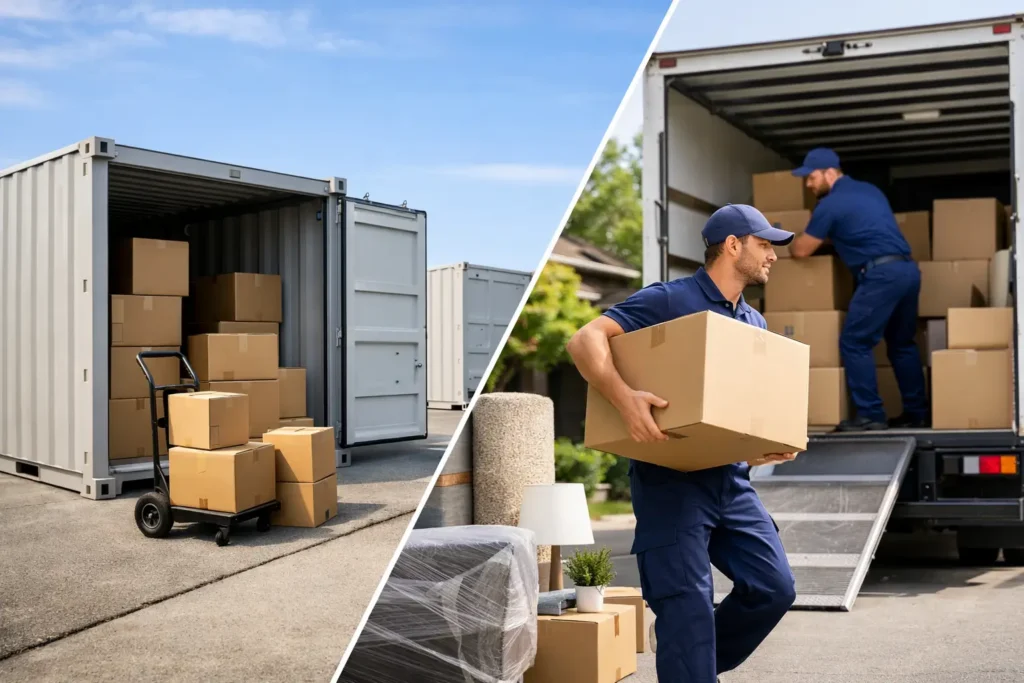
A moving container arriving in the driveway can look like the simple answer: load it when you have time, close the door, and deal with the rest later. But when you are facing stairs, heavy furniture, a tight settlement date or a full household to pack, that simplicity can disappear quickly. When weighing up storage containers vs removalists, the best choice comes down to how much work, risk and coordination you are prepared to take on yourself.
For some moves, a container offers useful breathing room. For others, a professional removals team is the difference between a long, exhausting week and a move day that stays under control. Here is how to make a clear decision based on your situation.
Storage containers vs removalists: the core difference
A storage container is primarily a space solution. A container is delivered to your property, you load your belongings, and it is collected or stored until you are ready for delivery. You are generally responsible for packing, lifting, loading and making the best use of the available space.
Removalists provide a moving service, not just a vehicle or storage space. The team can load and transport your belongings, work around access issues, protect furniture in transit and deliver items into the right rooms at the other end. Depending on the job, they may also help with packing, storage and specialist items.
Neither option is automatically better. A container may suit a gradual move with straightforward access and plenty of helping hands. Removalists are often the stronger choice when time is tight, belongings are heavy or delicate, or there is simply too much to manage alongside work and family life.
When a storage container can make sense
Containers can work well when your move has a flexible timeline. If you are renovating, waiting for a new home to be ready, or clearing a property in stages, having belongings close by may give you more control over the process.
They can also suit people who are comfortable doing the physical work. A small, single-level home with easy driveway access is very different from a unit with stairwells, limited parking and bulky furniture. If you have reliable helpers, suitable packing materials and enough time to load carefully, a container can be a practical option.
The main advantage is flexibility. You can sort, pack and load room by room instead of trying to complete everything in one day. That can be especially helpful for decluttering or downsizing, where decisions take time.
However, flexibility only helps if the container can be placed safely and legally at your property. Driveway space, street access, body corporate rules and local requirements can all affect whether a container is suitable. It is worth checking these details early, rather than finding out on delivery day that there is nowhere practical to put it.
The work that comes with self-loading
Loading a container is more demanding than it first appears. The heaviest pieces need to be placed securely, weight needs to be balanced, and furniture needs protection from rubbing, shifting and pressure during transport. A poorly loaded container can leave items damaged even if the container itself is handled carefully.
There is also the physical side of the job. Sofas, washing machines, fridges, beds and cabinets are awkward to move, particularly through narrow hallways or down steps. One rushed lift can lead to a damaged wall, a broken item or an injury that puts the whole move on hold.
Packing takes longer than most people expect as well. Boxes need to be strong, filled properly and labelled clearly. Fragile items need padding, while mattresses, timber furniture and appliances need protection from dirt and moisture. A container gives you the space, but it does not remove the planning required to use that space safely.
When removalists are the better fit
Professional removalists are often the right choice when the move needs to happen on a particular day and be completed properly. Families with children, people moving between leases, homeowners coordinating settlement dates and businesses relocating equipment usually benefit from having a trained team manage the heavy work.
This is particularly true when access is difficult. Ipswich homes can vary widely, from properties with sloping driveways and stairs to townhouses with tight entries or limited visitor parking. Experienced movers assess the path from door to truck, plan the loading order and work carefully around the practical issues that can slow down a move.
Removalists also bring the right equipment and handling experience. Furniture blankets, trolleys, straps and lifting techniques help protect both your belongings and your property. That matters for everyday items, but it matters even more for pianos, pool tables, spas, large glass pieces, office equipment and other items that should not be handled as an afterthought.
A good removals team also gives you one point of responsibility for the transport side of the move. Rather than chasing helpers, organising a ute or trailer, and hoping everything fits, you have people whose job is to keep the move organised and moving forward.
Timing changes the answer
If you have weeks to sort through belongings and no hard deadline, a container may give you the breathing room you need. It can allow you to pack gradually, store non-essential items and keep your home clearer while you prepare.
If you need to be out by a set time, removalists can be a safer option. A coordinated team can load the home efficiently, transport it and unload at the destination without leaving you surrounded by half-packed boxes at the end of a long day.
Interstate moves add another layer of complexity. Longer distances require careful loading, realistic delivery planning and better protection for belongings that will be in transit for longer. For a full household move, professional support often reduces the number of moving parts you need to manage yourself.
Storage is not always the same as moving
It helps to separate two questions: where will your belongings sit between homes, and who will move them safely? You may need storage, removalists, or both.
For example, if your new home is not ready yet, you might need secure storage for several weeks before delivery. If you are moving offices in stages, you may need items held while the new space is prepared. In these cases, a removalist that can manage packing, transport, storage and final delivery can make the handover much simpler.
That said, a container may be useful for short-term on-site storage during a renovation or clean-out. The right option depends on whether you need access to your items, how secure the location is and whether you can safely load and unload everything yourself.
Consider the belongings you are moving
Be honest about what is in your home or workplace. Flat-pack furniture and labelled boxes are one thing. A grand piano, solid timber dining table, oversized fridge or commercial filing cabinets are another.
High-care items often require more than strength. They need the right lifting method, protective wrapping and a transport plan that prevents movement. The same applies to sentimental pieces that cannot be replaced, even if they are not especially large or expensive.
For businesses, downtime can be the bigger concern. Desks, computers, stock, shelving and equipment need to arrive in good order and be placed logically so staff can get back to work. A removals crew can work to a clear plan, rather than leaving an office manager to coordinate loading while also running the business.
Questions to ask before choosing
Before deciding between a container and a removals team, look at the move as a whole. Ask yourself whether you have enough time to pack and load properly, enough capable help for the heavy items, and a safe place for a container to sit.
Then consider access at both properties. Are there stairs, narrow doorways, steep driveways, busy streets or distance from the front door to the vehicle? Finally, think about what happens if a helper cancels, rain arrives, an item will not fit, or the move takes far longer than planned.
If those questions make the job feel more complicated than expected, that is useful information. Moving support is not only about transport. It is about reducing the chances of a difficult day becoming a stressful one.
Choose the support that lets you move with confidence
A container can be a sensible tool for a slow, simple move where you have time, access and help. Removalists are usually the better choice when you need careful handling, reliable timing and an experienced team to take the physical pressure off.
Springall Movers works with households and businesses that want a move planned around the real conditions of their property, belongings and timeline. The best moving choice is the one that leaves you able to focus on settling in, rather than recovering from the move.