
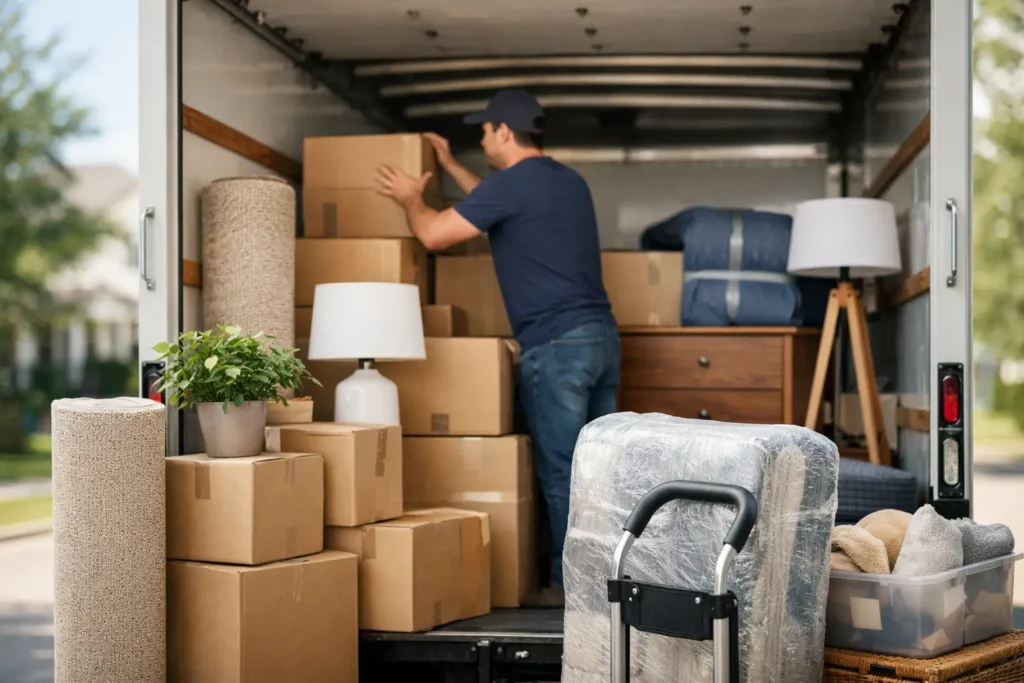
A moving truck can look surprisingly small once the sofa, fridge and first stack of boxes are waiting at the door. Knowing how to pack a moving truck is less about squeezing in every last item and more about loading in the right order. A balanced, secure load protects your belongings, makes unloading easier and helps move day run without unnecessary setbacks.
The best approach starts before the truck arrives. Have boxes sealed and labelled, furniture dismantled where practical, and a clear path from each room to the door. If you are using professional removalists, keep access clear and let the team know about unusually heavy, fragile or awkward items before loading begins.
Start with a plan, not the first box
Think of the truck as a series of layers. Heavy, sturdy items form the base against the front wall of the cargo area, closest to the cab. Medium-weight cartons and furniture fill the centre, while lighter items sit higher up or towards the rear. This keeps the load stable and avoids crushing fragile belongings.
Before loading, group items by size and strength rather than only by room. Put heavy book boxes, appliances and solid furniture together. Keep cartons marked fragile separate from anything that could shift or press against them. Your essentials box, cleaning supplies, keys, chargers and overnight bags should travel with you in the car where possible, not disappear behind a wall of furniture.
Measure large pieces before move day if you are unsure. A wardrobe that fits through the front door may still need to be turned carefully inside the truck. Taking five minutes to check dimensions can prevent a lot of reshuffling later.
How to pack a moving truck safely, step by step
Load the heaviest items first
Start with whitegoods, large cabinets, bookcases, sofas, mattresses and heavy packed boxes. Place these items upright against the front wall of the truck wherever safe to do so. Keep weight distributed across both sides rather than loading all heavy pieces on one side.
Fridges and freezers should be empty, clean and dry before the move. Protect corners and doors with moving blankets, then secure the appliance upright. If a fridge has been tipped or laid down during transport, follow the manufacturer’s guidance on how long it should stand before being switched back on.
For washing machines, secure internal moving parts according to the manufacturer’s instructions and make sure hoses are drained. These are not items to wedge in loosely and hope for the best.
Build a firm base with boxes
Once the largest pieces are in place, load the heaviest cartons on the floor. Boxes should be tightly packed, square and fully closed so they can carry weight without collapsing. Keep book boxes, kitchen cartons and tool boxes low.
Fill gaps as you go. Loose space allows items to move when the truck brakes, turns or travels over uneven roads. Rolled rugs, secured cushions and sturdy cartons can help fill small voids, but do not use fragile boxes as gap-fillers.
It is tempting to pile boxes as high as possible. Only stack cartons when the boxes below are strong, evenly sized and not labelled fragile. A lower, stable stack is always better than a tall, unstable one.
Protect furniture before it goes in
Moving blankets are one of the simplest ways to prevent scuffs, scratches and rubbed edges. Wrap timber furniture, glass-topped pieces, bed frames and appliances, then secure the blankets with tape or stretch wrap that will not damage the surface. Avoid placing tape directly on polished timber, painted surfaces or upholstery.
Take legs off tables where practical and wrap them separately. Keep screws, bolts and small fittings in labelled bags, then tape the bag securely to the underside or inside of the relevant furniture item. For drawers, remove loose contents first. Light drawers can sometimes stay in place if secured, but heavy drawers should come out to reduce weight and prevent damage.
Mattresses travel best on their side, protected by a cover or clean blanket. They can create a useful padded wall beside other furniture, but they should still be tied off so they cannot fall when the rear door opens.
Use straps at every major layer
A truck load should be secured in sections, not just tied once at the very end. Use load-rated straps or ropes attached to the truck’s anchor points after completing each major layer. This is especially important when there is empty space behind the load or when travelling a longer distance.
Straps should hold items in place without digging into delicate finishes. Place blankets beneath the strap where needed, and check that the strap is tight enough to prevent movement. If you can push a cabinet or stack of boxes and it shifts, it needs more securing.
Do not rely on a single item to hold everything back. A solid load uses weight distribution, close packing, protective padding and straps together.
Give fragile and awkward items their own strategy
Fragile items are safest when packed in strong cartons with no empty space inside. Plates should be wrapped individually and packed vertically, while glassware needs paper or cushioning around and between each piece. Mark cartons clearly, but remember that a label alone will not protect the contents. Their position in the truck matters most.
Load fragile cartons after the heavier base is stable. Keep them above ground level where possible, away from heavy boxes and protected by soft items or blankets. Mirrors, framed artwork and glass panels should be wrapped, kept upright and secured against a flat surface. Never lay heavy objects across them.
Pianos, pool tables, spas and other high-care items need more than careful lifting. Their weight, shape and moving requirements can create a safety risk for both people and property. These items are best handled with the right equipment and an experienced team rather than treated as another bulky piece of furniture.
Keep the rear of the truck practical
The items you will need first at the new address should be the last items loaded, near the rear door. This might include the bed frames and mattress, a basic kitchen carton, toilet paper, cleaning supplies and tools for reassembly. It saves you from unpacking half the truck just to make the first night comfortable.
Keep a clear route inside the cargo area as long as you can. You do not need a wide walkway all the way through, but you should be able to reach straps and check the load before the door closes. Once the truck is loaded, inspect both sides, test that the rear door closes freely and make sure nothing is leaning against it.
Common packing mistakes to avoid
Most truck-loading problems come back to a handful of preventable mistakes:
- Loading light boxes first, then placing heavy furniture on top of them.
- Leaving open gaps that let furniture slide during the drive.
- Using damaged, overfilled or poorly sealed cartons.
- Forgetting to strap each section of the load.
- Packing essentials so deeply that they cannot be reached on arrival.
- Trying to move very heavy specialty items without suitable equipment or help.
A full truck does not automatically mean a well-packed truck. Sometimes a second trip, a larger vehicle or professional loading support is the safer choice, particularly when you have bulky furniture, stairs, long travel distances or valuable items that cannot be replaced.
Take your time before the wheels move
Before leaving, walk around the truck and check the load one final time. Confirm that straps are secure, blankets are not hanging loose, doors are latched and nothing is likely to shift when the vehicle turns. Drive smoothly, allow extra braking distance and avoid sudden movements where possible.
For Ipswich households moving locally or heading further afield, a calm loading plan makes the whole relocation feel more manageable. If the job feels bigger than expected, Springall Movers can take care of the heavy lifting and careful loading, leaving you free to focus on settling into your new place.