
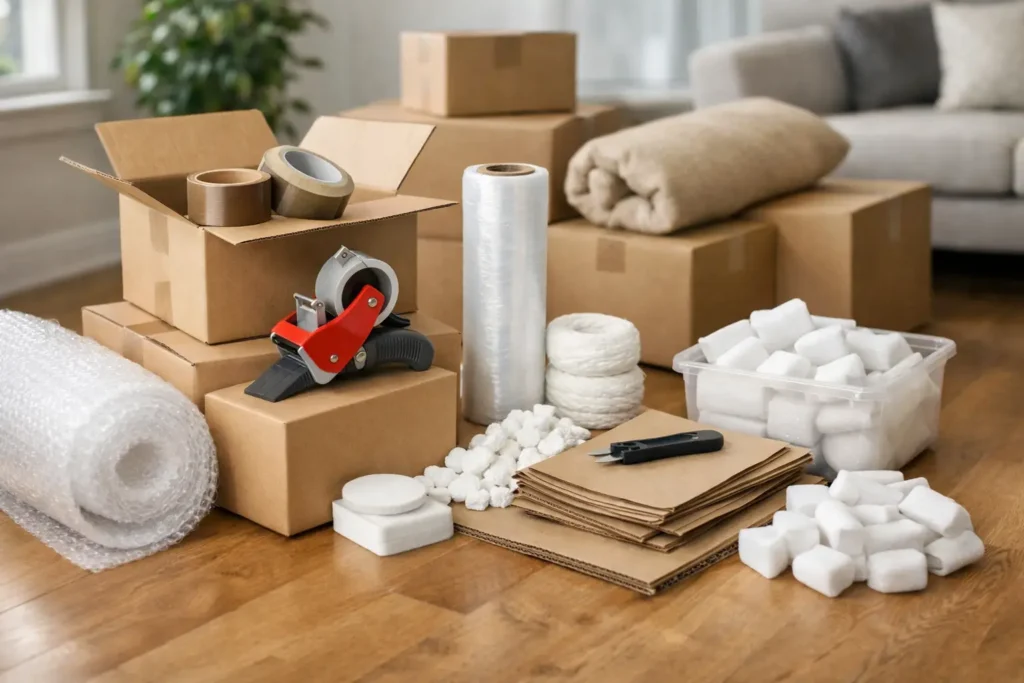
The right packing supplies do more than fill boxes. They protect the things that make a house feel like home, keep your move organised, and save a great deal of stress when the truck arrives. A weak carton, poorly taped base or unlabelled box can quickly turn a straightforward move into a frustrating one.
For most Ipswich households, packing works best when it is planned room by room rather than tackled all at once. Start with the items you use least, choose materials that suit what you are packing, and give yourself enough time to label everything properly. Careful preparation means your belongings are easier to load, safer in transit and far simpler to unpack at the other end.
Packing supplies worth having before you start
You do not need every moving product on the market. You do need dependable basics that match the weight, shape and fragility of your belongings. Quality cartons, packing tape and protective wrapping are the foundation of a safer move.
Strong moving cartons are preferable to tired supermarket boxes, especially for books, kitchenware, electronics and anything valuable. Used boxes can still be useful for light, low-risk items, but check that they are dry, clean and free from crushed corners. If a carton has already done several moves, it may not hold up when stacked in a truck.
Keep a mix of small, medium and large cartons. Small boxes are best for heavy items such as books, canned food and tools. Medium cartons suit general household goods, while large cartons should be reserved for lighter belongings such as linen, cushions, toys and clothing. The biggest box is not always the best box – an overfilled carton is difficult to lift safely and more likely to split.
Alongside cartons, have strong packing tape, a tape dispenser, permanent markers and labels ready from day one. The dispenser may seem like a small detail, but it makes repetitive packing much quicker and helps create a secure seal along every box base and top.
For protection inside boxes, packing paper is one of the most useful supplies you can buy. It cushions fragile items without leaving ink marks behind, unlike newspaper. Bubble wrap is helpful for glassware, framed artwork, lamps and delicate electronics, while furniture blankets and protective covers help prevent scuffs on larger pieces.
Match your packing supplies to the item
Packing well is less about using more material and more about using the right material in the right place. A box of books needs a strong base and sensible weight. A box of glasses needs cushioning at the bottom, around each item and across the top. Treating both boxes the same is where damage often begins.
Kitchenware and breakables
Start with a layer of scrunched packing paper at the base of the carton. Wrap plates individually, then stand them on their edge rather than stacking them flat. This reduces pressure across the surface during handling. Cups and glasses should be wrapped one at a time, with extra paper tucked inside hollow items.
Use smaller cartons for heavy kitchen items and fill empty spaces with paper so nothing can shift. A box should feel full but not strained. Before sealing it, place a final cushioning layer over the top and gently test for movement.
Furniture and mattresses
Furniture blankets are designed to protect timber, upholstery and painted surfaces from rubbing during loading and transport. They are especially worthwhile for dining tables, bedside tables, drawers and larger pieces that may be carried through narrow hallways or doorways.
Remove loose shelves, glass panels and detachable legs where practical, then wrap and label them clearly. Keep screws, bolts and small fittings in a sealed bag, and tape the bag securely to the relevant furniture item or store it in a clearly marked essentials box. Do not tape directly onto polished timber, glass or delicate finishes.
Mattress protectors keep mattresses clean and dry while they are being moved. This matters even more if a mattress needs to be placed temporarily on a driveway, in storage or near other household goods during loading.
TVs, computers and electronics
Original boxes are ideal if you still have them, particularly for televisions and monitors. If you do not, use a correctly sized carton with plenty of cushioning and keep the item upright where possible. Remove cords, remotes and accessories, label them, and pack them together so they do not disappear into separate boxes.
Take a quick photo of cable connections before disconnecting a computer, television or office setup. It makes reconnection easier later, particularly when several devices look alike. Avoid packing electronics in cartons with heavy items that could move against them.
Clothing, linen and everyday items
Wardrobe cartons make it easy to move hanging clothes without folding and re-hanging them. They are useful for formal wear, uniforms and garments that crease easily. For most other clothes, clean cartons, suitcases and storage tubs are perfectly practical.
Linen, towels and cushions are useful fillers for light boxes and can add a little protection around awkward items. Just avoid using them as the only protection for fragile belongings. They are better as a buffer than a substitute for packing paper or bubble wrap.
How to pack cartons that stay secure
A carton is only as strong as its base. Use the H-taping method: run one strip of tape down the centre seam, then add tape across both edge seams. This provides better support than a single strip across the middle.
Pack heavier items at the bottom and lighter items on top. Keep weight balanced from side to side, and do not leave large gaps that allow contents to slide. If there is space left at the top, add paper, linen or other soft packing material before closing the lid.
Be realistic about weight. A carton should be manageable for one person to lift safely, not a test of strength. If it feels too heavy while you are packing it, divide the contents between two boxes. This protects both your belongings and the people handling them.
Label boxes for the person unpacking them
A label that says “miscellaneous” is rarely helpful when you are standing in a new home looking for the kettle, phone charger or children’s school uniforms. Label each carton with its destination room and a simple description of what is inside, such as “Kitchen – everyday plates” or “Main bedroom – bedside books”.
Mark fragile boxes clearly on more than one side. It is also helpful to write “this side up” when the contents need to remain upright. These instructions are not a replacement for proper packing, but they give everyone handling the box useful guidance.
Set aside an essentials box for the first night. Include medication, chargers, toiletries, basic cleaning items, a kettle, tea or coffee, snacks, toilet paper, important documents and anything your family will need before the rest of the house is unpacked. Keep this box with you if possible rather than loading it deep inside the truck.
Packing mistakes that create avoidable problems
Rushing is the most common issue. People often begin with good intentions, then start placing unrelated items in the nearest available box as moving day gets closer. This makes unpacking slower and can leave fragile items unprotected.
Another problem is using rubbish bags for everything. They can be useful for soft items such as bedding, but they offer almost no protection and are easy to tear. Clear bags can also lead to confusion if they contain items that should not be left visible or stored outside.
Avoid packing hazardous materials with household goods. Petrol, gas bottles, pool chemicals, paint, batteries and other dangerous items need to be handled according to their specific requirements. If you are unsure whether an item can travel safely, ask before move day rather than making assumptions.
Specialty items deserve their own plan. Pianos, spa equipment, pool tables, large aquariums and valuable artwork are not standard cartons-and-tape jobs. Their size, weight and delicate components call for suitable equipment, trained handling and careful preparation.
Give yourself a calmer moving day
Good packing is not about making every box look perfect. It is about creating a clear, safe system that protects your belongings and lets the move progress without unnecessary delays. Start early, pack one area at a time, and keep supplies within reach so you are not hunting for tape halfway through a carton.
If time is tight, your home is complex, or there are high-care items you do not want to risk, professional packing support can take the pressure off. Springall Movers can help households and businesses prepare for a move with the same care used when loading and transporting belongings.
A well-packed home gives you one less thing to worry about. When the last carton is sealed and clearly labelled, you can focus on opening the door to your next place rather than wondering what may have gone wrong along the way.