
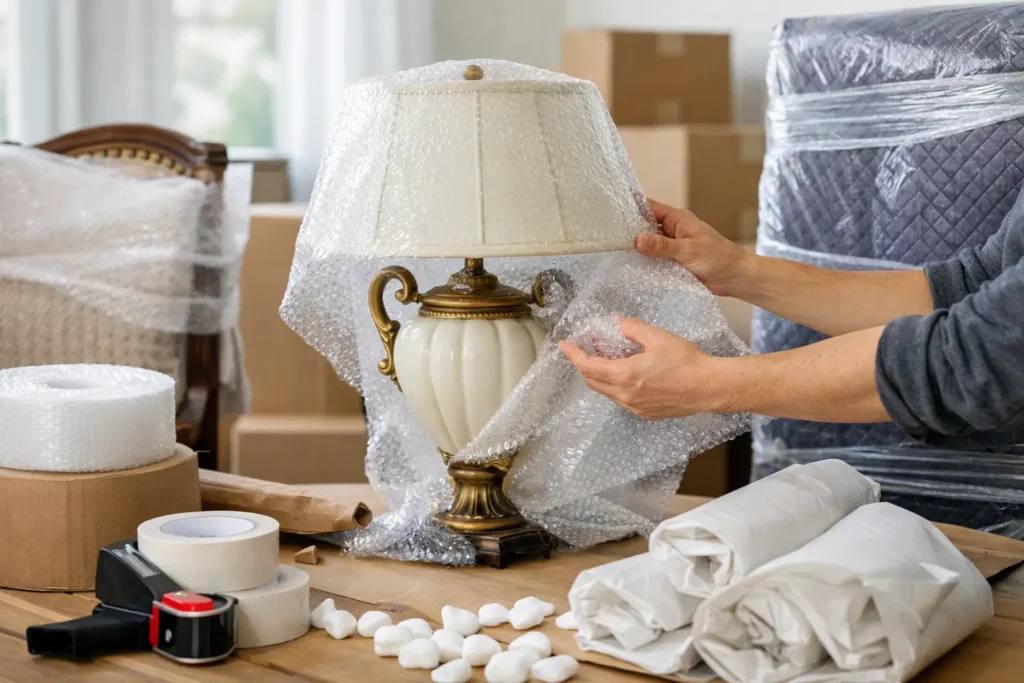
That glass-fronted cabinet in the dining room, the marble-top side table, the vintage chair with the loose arm – they all have one thing in common. They rarely get damaged because of the truck ride itself. More often, the trouble starts earlier, when people rush the prep. If you are wondering how to pack fragile furniture without cracks, scratches or shaky joints at the other end, the key is careful preparation before anything gets lifted.
Fragile furniture is different from standard moving boxes because the risk is not just breakage. It is also pressure damage, warping, chipped edges, torn upholstery and parts shifting in transit. A piece can look solid in the house, then fail once it is carried through tight doorways, loaded at an angle or stacked beside heavier items. That is why the packing method needs to match the item, not just the move.
Why fragile furniture gets damaged so easily
Most damage comes from friction, impact and movement. Timber pieces get scratched when wrapping slides. Glass cracks when there is pressure on one point instead of support across the whole panel. Chairs and tables often loosen at the joints because they are lifted by the wrong section or packed with tension on the frame.
There is also a common mistake people make with protective materials. More wrapping is not always better. If a delicate item is wrapped too tightly, especially around glass panels or decorative trim, the pressure can do harm before the move even begins. Good packing is about cushioning and stability, not squeezing everything into one bulky bundle.
How to pack fragile furniture the right way
Start by cleaning each item lightly so dust or grit does not get trapped under moving blankets or bubble wrap. Even fine particles can leave scratches on polished timber, gloss finishes and glass. Once the surface is clean, inspect the furniture for weak points. Look for hairline cracks, loose legs, removable shelves, doors that swing open, or sections that already wobble.
If a piece can be partly disassembled without risking damage, that is usually the safer option. Removing legs from a dining table, shelves from a display unit, or cushions from an occasional chair can make the item easier to protect and carry. Keep screws, brackets and fittings together in a labelled bag and tape that bag to the underside of the item or store it in a clearly marked box. Small parts go missing quickly on moving day when everything is happening at once.
The wrapping order matters. Start with a soft protective layer against the furniture itself, especially on polished wood, painted surfaces or delicate upholstery. A clean moving blanket, furniture pad or non-abrasive wrap helps prevent scratches. Then add cushioning to corners, edges and any raised details. Bubble wrap can work well on vulnerable spots, but avoid placing tape directly on finished surfaces because it can lift polish, stain or paint.
For glass sections, take extra care. If the glass can be removed safely, pack it separately. Stand it upright rather than laying it flat, and pad both sides evenly. If the glass stays in the furniture, secure it so it cannot rattle, then protect the entire panel with padding that spreads pressure across the surface. The goal is to stop movement without creating stress points.
Packing different furniture materials
Timber furniture needs protection from knocks and rubbing. Dining tables, buffets and bedheads often suffer edge damage first, so give extra attention to corners and carved details. If the finish is delicate, breathable wrapping is better than plastic sitting directly against the surface for long periods, particularly in warm conditions.
Glass furniture needs stability more than bulk. Thick layers of wrap can make a glass top feel protected, but if it is still able to shift inside the wrapping, the risk remains. Secure the wrap so it holds firm, then keep the piece upright and separated from heavy items.
Stone or marble furniture is heavy and brittle at the same time, which catches people off guard. These pieces can crack from uneven lifting or twisting through a doorway. If there is a removable stone top, separate it from the base and pack each part individually. Never rely on the frame alone to support the weight during a move.
Upholstered furniture may not seem fragile, but fabric, leather and decorative trims mark easily. Wrap lounges, armchairs and bedheads in clean covers that keep out dirt and moisture without dragging rough material across the surface. Be especially careful with light-coloured fabric and leather, which can pick up marks from hands, tape adhesive or dirty blankets.
The materials worth having on hand
The best packing materials are the ones that protect without causing a second problem. Clean moving blankets are one of the most useful items because they cushion well and suit most furniture types. Bubble wrap is helpful for corners, legs and glass, while cardboard edge protectors can add structure around delicate table tops and mirrors.
Stretch wrap can be useful over blankets to keep them in place, but it should generally go over the protective layer rather than straight onto finished furniture. Tape is for securing outer wrapping, not touching surfaces that matter. If you are using cardboard sheets, felt pads or foam corners, make sure they are clean and dry before they go anywhere near timber or upholstery.
If you are short on proper materials, it is better to pause and get the right protection than improvise with whatever is in the cupboard. Old towels and doonas can help in a pinch, but they shift more easily and usually do not protect corners well. That may be enough for a basic side table, but not for an antique cabinet or a marble console.
Loading matters as much as packing
Even the best wrapping will not save a fragile piece that is loaded badly. Furniture should be positioned so it cannot slide, tip or bear weight it was never designed to carry. Glass-fronted units, tall cabinets and occasional tables are especially vulnerable if they are wedged awkwardly or pressed against heavier items.
This is where experience makes a real difference. Professional movers think about load order, weight distribution and tie-off points from the start. A fragile item should not just fit in the truck. It should be supported in a way that keeps it stable for the entire trip, whether that is across town or interstate.
For households in Ipswich and surrounds, this is often the point where DIY moving gets harder than expected. The packing may feel under control inside the home, but once bulky or delicate furniture has to be carried through narrow halls, down stairs or into a truck with other contents, the margin for error gets smaller.
When to pack it yourself and when to call in help
Some fragile furniture can be packed safely at home if you have time, proper materials and another careful pair of hands. Small side tables, standard chairs and sturdy timber pieces are often manageable with the right prep. The risk rises with size, age, awkward shape and sentimental value.
If the item is antique, oversized, unusually heavy or difficult to disassemble, professional help is usually the safer call. The same goes for pieces with glass doors, stone tops, intricate carvings or weak joints. One wrong lift can do more damage than the road ever would.
A local team like Springall Movers sees these problems before they happen. That matters when the goal is not just getting furniture from one address to another, but getting it there in the same condition it left.
Common mistakes to avoid
People often underestimate how much movement happens inside a truck. A wrapped item that still has room to shift is not properly protected. Another mistake is carrying furniture by removable parts such as chair backs, table edges or cabinet doors. Those are usually the first areas to fail under strain.
Over-packing can also be an issue. If a piece becomes so bulky that you cannot grip it properly or see where the edges are, it gets harder to move safely. And if you leave removable shelves, drawers or hardware loose, they can turn into impact points in transit.
Labelling helps more than people expect. Mark items that are top-heavy, glass-fronted or need to stay upright. It gives everyone handling the move a quick heads-up before they make a rushed decision at the truck.
Fragile furniture rewards patience. Take the extra ten minutes to remove a shelf, pad a corner or secure a door properly. That small bit of effort is often what stands between a smooth delivery and a repair job nobody wanted.