
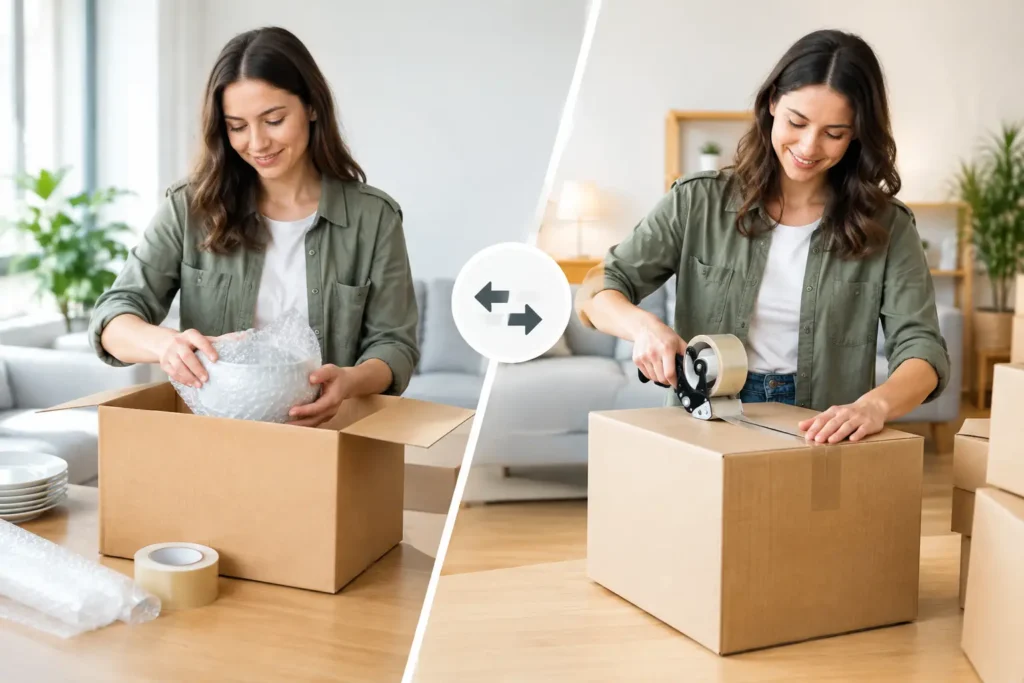
The last week before a move is when good intentions meet reality. Half-filled boxes take over the lounge room, the kettle disappears too early, and the garage somehow contains twice as much as you remembered. A self packing comparison helps you decide whether to pack everything yourself, bring in professional help, or use a mix of both – before moving day becomes more stressful than it needs to be.
There is no one right answer for every household or business. The best choice depends on your timeline, the type of belongings you have, how much help is available, and how confident you feel protecting items for the trip ahead. What matters is choosing a plan that keeps your move organised, your possessions safe, and your move day running smoothly.
Self packing comparison: DIY versus professional packing
Self packing gives you full control over what goes into every carton. You can sort as you go, decide what stays and what goes, and unpack in a way that suits your new home. For people moving from a smaller property, with plenty of time before settlement or handover, this can be a practical option.
Professional packing shifts the physical work and much of the planning to an experienced team. Packers know how to wrap fragile pieces, fill cartons properly, protect furniture, and label loads so they can be placed in the right rooms at the other end. It is particularly useful when the move involves a large home, a busy family, an office, valuable items, or a tight deadline.
The difference is not simply who puts items in boxes. It is about where you want to spend your time and where the risk sits. A carton packed too loosely can collapse or allow contents to move around. A carton packed too heavily can be difficult to lift safely. Experienced packers work with those details every day.
When packing yourself makes sense
DIY packing can work very well when the move is straightforward and you can start early. If you have several weeks to work through rooms one at a time, self packing lets you reduce clutter before you move. It also means you can keep everyday essentials accessible until the last possible moment.
It suits people who know exactly what they own and are comfortable making decisions quickly. A couple moving from a unit, for example, may find it manageable to pack books, clothing, kitchenware and linen over a few evenings. The same may be true for a small business relocating files and non-fragile supplies, provided there is a clear labelling system and no disruption to daily operations.
The key is to be realistic about the workload. Packing a home nearly always takes longer than expected, especially once you reach cupboards, sheds, wardrobes, laundry shelves and drawers that have not been cleared out in years. Allow enough time to pack properly rather than rushing through it the night before the truck arrives.
What DIY packers need to get right
Good cartons and packing materials make a genuine difference. Use sturdy moving boxes rather than worn supermarket cartons, and keep box weights manageable. Books, tools and records should go into smaller cartons. Lighter items such as doonas, cushions and linen can fill larger boxes.
Wrap glasses, ceramics and ornaments individually, then fill gaps so contents cannot shift. Plates should be packed on their edges rather than stacked flat. Label each box with its destination room and a short description of what is inside. Writing “kitchen” on ten cartons may be accurate, but “kitchen – everyday plates” is far more useful when you need dinner after a long day.
Set aside a clearly marked essentials box for the first night. Include medications, chargers, toilet paper, basic toiletries, pet supplies, important documents, a change of clothes and tea or coffee. Keep valuable jewellery, passports and personal paperwork with you rather than loading them into the moving truck.
When professional packing is the safer choice
Professional packing is often worth considering when there is too much to do and too little time to do it well. This may be a last-minute move, a settlement date that cannot move, or a household balancing work, children and school commitments. It can also help during stressful transitions such as downsizing, clearing a family home, or moving into storage.
It is a strong option for fragile, awkward or high-care belongings. Artwork, mirrors, antiques, glass cabinets, electronics and delicate kitchenware need more than a few sheets of newspaper. Proper wrapping, protective materials and sensible loading order all help reduce the chance of damage in transit.
Large furniture and specialty items need their own plan as well. Pianos, pool tables, spas and other heavy pieces should be assessed and handled by people with the right equipment and experience. Packing services can be combined with removal support so furniture protection, loading and transport work together rather than becoming separate jobs for you to coordinate.
For office moves, professional packing can protect equipment and reduce downtime. Computers, monitors, files and workstations need to arrive in an organised way, not as a collection of mystery boxes. Clear labels and room-by-room placement help staff get back to work sooner.
A hybrid approach can be the best fit
You do not have to choose between packing every single thing yourself and handing over the entire house. Many moves benefit from a hybrid approach. You might pack clothing, books and personal items while arranging help for the kitchen, fragile décor, large furniture or the final day of preparation.
This can be a sensible choice for families who want to sort through personal belongings themselves but do not want the pressure of wrapping every glass and dismantling every piece of furniture. It also gives business owners control over confidential files while leaving equipment and general office packing to experienced hands.
The best division of work is usually based on risk and time. Pack what is simple, familiar and non-urgent. Ask for help with items that are fragile, difficult to lift, time-consuming or likely to cause problems if packed incorrectly.
Questions to ask before you decide
Start with your moving date. If you have only a few days left and the house is still largely unpacked, taking on everything yourself may create unnecessary pressure. If your move is weeks away and you can commit regular time to the job, DIY packing may be manageable.
Next, look honestly at the contents of your home or workplace. A one-bedroom unit with minimal furniture is very different from a four-bedroom family home with a shed, outdoor setting, garage storage and a collection of breakables. Consider access too. Stairs, narrow hallways, difficult driveways and long carrying distances make preparation more important.
Finally, think about your energy on moving day. Packing is only one part of the job. You still need to arrange keys, clean, manage children or pets, disconnect appliances, check rooms, and settle into a new space. Saving energy before the truck arrives can make the whole day feel more controlled.
Make either option work better
Whether you pack yourself or use professional assistance, start by removing what you no longer need. Donate usable items, recycle where possible and dispose of rubbish before packing begins. There is little sense in moving things you already know you will not use.
Create a simple room-by-room plan and avoid mixing items from different rooms in the same carton unless they are clearly labelled. Keep pathways clear as boxes build up, and do not stack cartons in front of doors or stairs. If you are self packing, aim to have most boxes finished before the final two days, leaving only daily essentials and refrigerated food for last.
For Ipswich households and businesses, local knowledge can also make a difference to the day’s planning. Access, parking, weather and travel timing all affect how efficiently a move can be completed. A dependable removalist will ask the practical questions early, explain what is needed, and turn up ready to get on with the job.
Springall Movers can assist with packing, transport and high-care items, whether you need support for the whole move or only the parts that feel hardest to manage. The goal is not to take control away from you. It is to make sure your belongings are protected and your move has a clear plan.
A good move does not depend on doing everything yourself. It depends on making sensible choices early, packing with care, and getting the right help where it counts. Give yourself enough time, keep the plan simple, and let moving day be about getting settled rather than chasing loose boxes.