
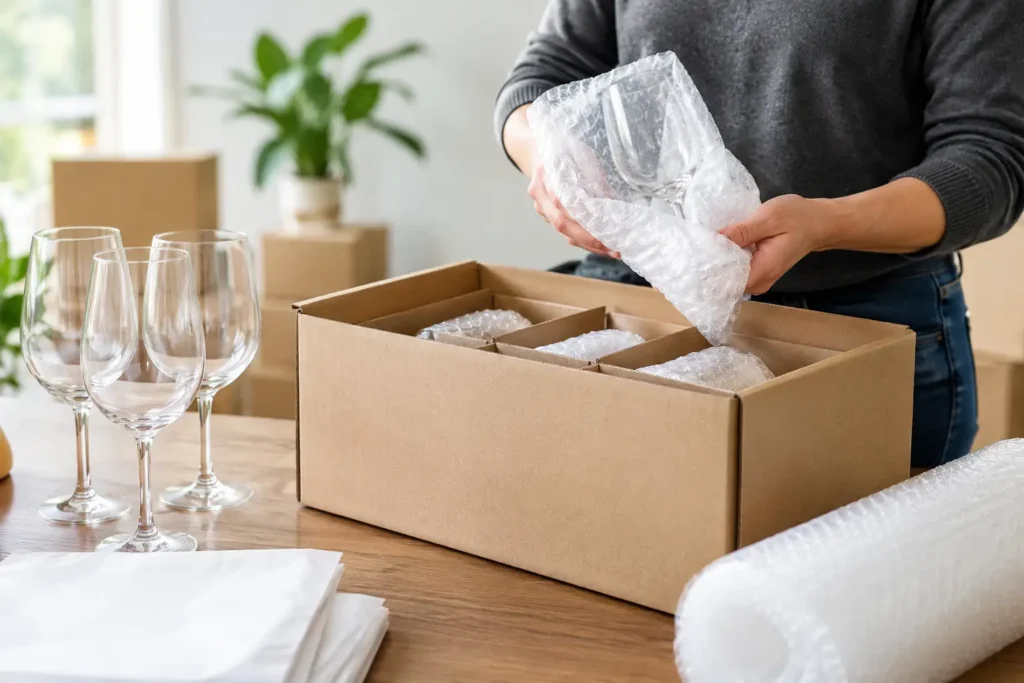
A wine glass can survive years in the cupboard, then crack in seconds when it is packed loosely in a box. Knowing how to pack fragile glassware properly is less about using mountains of packing paper and more about creating a secure system: wrap each piece, fill empty space, use the right box, and keep weight under control.
Whether you are packing up a family kitchen, moving out of a rental, or preparing a larger home move, taking a little extra care with glassware can prevent an unpleasant surprise when you unpack. The aim is simple: nothing should be able to touch, shift or rattle inside the box.
Gather the right packing materials first
Packing is easier when everything is within reach. Stopping halfway through to search for tape or more paper often leads to rushed wrapping, and rushed wrapping is where breakages happen.
For most household glassware, you will need:
- Small to medium sturdy moving boxes, preferably double-walled for heavier loads
- Clean packing paper or butchers paper, plus bubble wrap for delicate or valuable pieces
- Strong packing tape and a marker
- Cardboard dividers, towels or soft linen for extra cushioning where needed
Avoid using newspaper directly against clear glass if possible. Ink can transfer onto the surface, especially if items are stored for a while or exposed to moisture. Newspaper can still be useful as outer padding, but clean paper is the better choice around glasses, bowls and serving pieces.
It can be tempting to use one large box for all your glassware. In practice, smaller boxes are safer because glass becomes very heavy very quickly. A box that is difficult to lift is more likely to be dropped, or have its bottom give way.
How to pack fragile glassware one piece at a time
Start by preparing the box before you wrap anything. Tape the base across the centre seam, then add two strips across it in the opposite direction. Place a generous, scrunched layer of packing paper at the bottom. This creates a cushion if the box is set down firmly.
Lay a sheet of packing paper flat and place one glass near a corner. For tumblers, drinking glasses and mugs, tuck paper gently inside first. This supports the weakest area and helps prevent pressure from being applied directly to the sides.
Roll the item diagonally through the paper, folding in the sides as you go. The finished bundle should be snug but not tightly squeezed. Secure it with tape only if necessary. Too much tape slows unpacking and can pull at delicate finishes.
Give stemware extra support
Wine glasses, champagne flutes and cocktail glasses need more attention because the stem is vulnerable. First, loosely wrap the stem with a narrow strip of paper. Then place the entire glass on a full sheet of packing paper and roll it from the bowl towards the base.
Do not pack glasses inside one another, even if they appear to fit neatly. Nested glasses place pressure on rims and can become stuck together. One sharp bump can damage both pieces at once.
For crystal, heirloom pieces or particularly thin glass, use a second layer of paper or a light layer of bubble wrap after the initial paper wrap. Bubble wrap is useful protection, but it works best as an outer layer rather than directly against every item. Paper conforms more closely to the glass and prevents pieces from sliding around.
Plates, bowls and serving dishes need a different approach
Flat glass plates and platters are generally safer packed on their edge, much like vinyl records, rather than laid flat in a stack. Wrap each plate separately, place a cardboard sheet between every few pieces, and stand them upright in the box. This reduces the load pressing down through the centre of the stack.
Bowls should be wrapped individually, with a small amount of paper placed inside each one. Pack them upright where possible, arranging them so they cannot lean or knock together. Larger serving bowls may need their own box if they are particularly heavy or awkwardly shaped.
Pack the box tightly without overloading it
Place the heaviest wrapped items at the bottom and lighter pieces on top. Keep similar shapes together where you can, but do not force a tight arrangement just to fit more in. Glassware should sit securely, not under pressure.
As each layer is added, fill every gap with scrunched packing paper. This is one of the most important parts of the process. Empty space allows items to move. Movement creates impact, even when a box is only carried from the kitchen to the truck.
Before sealing the box, place a final layer of cushioning on top. Close the flaps and gently move the box from side to side. If you hear clinking or feel anything shifting, reopen it and add more padding. A properly packed glassware box should feel full and stable, not loose or rattly.
There is a balance to strike here. Packing too loosely is risky, but overfilling a box can put pressure on the items inside and make the box too heavy to handle safely. If the flaps will not close naturally, use another box rather than forcing them down.
Use dividers when they genuinely help
Cell dividers are particularly useful for matching wine glasses, tumblers and other pieces of similar size. They keep individual items separated and make unpacking more organised. Still, dividers are not a substitute for wrapping. Each glass should be wrapped before it goes into its compartment.
Dividers are less practical for mixed kitchen glassware, unusual shapes, or items with large handles and stems. In those cases, carefully packed paper bundles often provide a better fit. It depends on what you own and how much time the items may spend in transit or storage.
If you are reusing boxes, inspect them first. Damp, crushed or torn cardboard is not suitable for fragile items. The box may look acceptable on the outside but fail when lifted from underneath.
Label boxes clearly for safer handling
Write FRAGILE – GLASSWARE on the top and at least two sides of every box. Add the destination room, such as “Kitchen” or “Dining room”, so the box can be placed in the right spot on arrival.
Arrows showing which way is up can help, particularly for stemware and boxed sets. However, good internal packing still matters most. Boxes can be turned during loading, so every item should be protected from all sides rather than relying on labels alone.
Keep an especially delicate box separate if it contains sentimental pieces, hand-blown glass, antique crystal or a complete matching set. Take a quick photo of valuable items before packing for your own records, then make a note on the box without advertising what is inside.
Handle glassware carefully on moving day
Fragile boxes should be loaded into the moving vehicle upright, with heavier and more stable furniture positioned around them where appropriate. They should never be placed underneath heavy cartons, appliances or furniture.
Avoid leaving glassware in direct sun or excessive heat for extended periods, particularly if you have used plastic storage tubs. Sudden temperature changes can be unkind to certain delicate pieces, while heat can weaken tape and make boxes less reliable.
When you arrive, unpack glassware over a clear bench or table, not on the floor where a dropped item has little chance of surviving. Keep the packing paper until you have checked every item. It makes repacking simple if something needs to go into storage or be moved again.
For households in Ipswich planning a busy move, professional packing support can remove the pressure from the most time-consuming rooms. Springall Movers can help ensure high-care household items are packed and handled with the attention they deserve.
The best test is the quiet-box test: if the carton is easy to lift, does not rattle and is clearly marked, your glassware has the best chance of arriving exactly as it left. Take your time with the pieces you would hate to replace. That extra care pays off the moment you open a box and find every glass intact.