
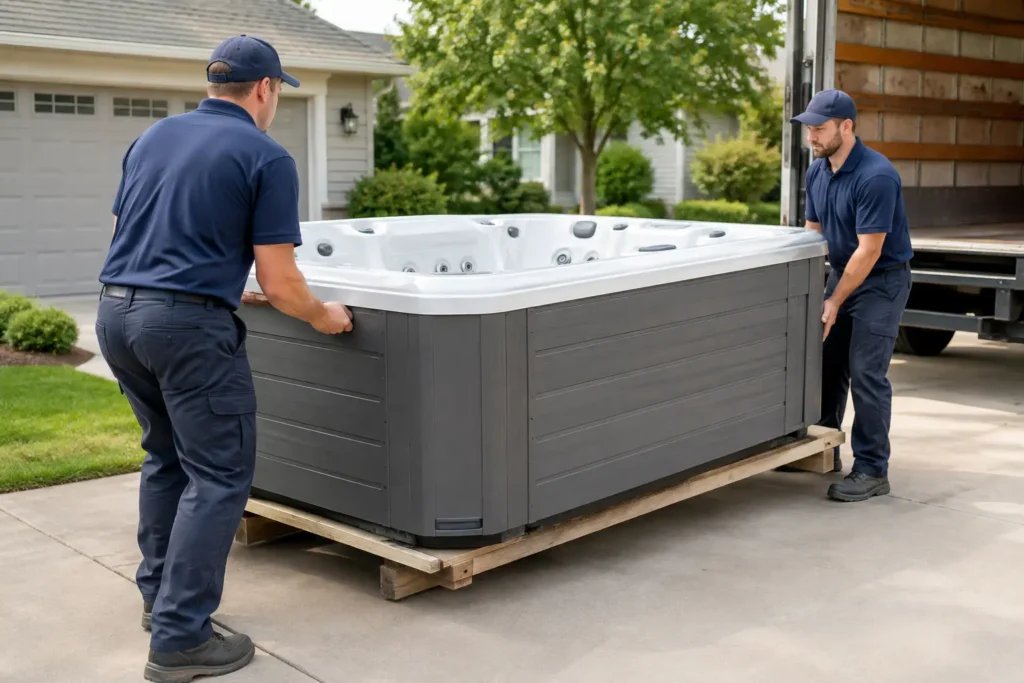
A spa can look like one large item sitting quietly in the backyard. On moving day, it is anything but simple. Its weight, awkward shape, fragile shell and fixed position can turn a short move into a high-care job. This spa transport case study follows the kind of planning needed to move a spa safely between homes, without treating it like ordinary outdoor furniture.
The details below are based on a typical local spa relocation. Every property is different, so the exact equipment and approach always depend on the spa, the access and the conditions on the day.
The job: a spa with tight backyard access
The customer was moving from a family home with the spa positioned at the rear of the property. The new address had room for it beside the patio, but there was one clear challenge at both homes: narrow side access.
At the collection address, the spa sat on a paved area behind the house. The route to the front passed through a side gate, around a hot water system and across a section of uneven ground. At the delivery address, the path included a slight slope and a turn around a garden bed before reaching its final position.
This is where a standard move can go wrong if the job is rushed. A spa shell can crack if it is twisted or placed under pressure. Pavers, gates, walls and garden edges can also be damaged when the team does not have enough room to manoeuvre. The goal was not simply to get the spa onto the truck. It was to protect the spa and both properties at every stage.
Planning starts before the truck arrives
A proper spa move begins with a clear picture of the job. Before transport, the customer needs to arrange for the spa to be emptied, disconnected and fully drained. Water left in the pipes adds weight and can leak during handling, while electrical work should always be completed by an appropriately qualified professional.
The removal team also needs practical information: the spa’s approximate dimensions, photos of access points, gate widths, steps, slopes, driveway space and the intended placement area. Photos are especially useful because they show obstacles that may not seem important at first, such as low eaves, a narrow turn, soft lawn or a steep section of path.
For this move, the access review confirmed that the spa could travel through the side access, but only with careful positioning. The gate needed to be opened fully, loose outdoor items had to be cleared away, and the path required protection from concentrated weight and wheel marks.
Good planning is not about making the job sound complicated. It is about avoiding surprises on the day. If access is too narrow or the spa must go over a house, a different method may be required. Being upfront about that early gives everyone a safer, more realistic plan.
The pre-move checks that mattered
The team checked that the spa was dry and disconnected, measured the access route, and confirmed where the truck could park without blocking neighbours or creating an unsafe carrying distance. They also looked at the weather. Rain can make paving, grass and sloped paths slippery, which changes the handling plan.
The customer cleared pot plants, outdoor chairs and loose items from the route. This small preparation step made a real difference. It gave the movers room to focus on the spa rather than stopping repeatedly to work around obstacles.
How the spa was protected for transport
Once onsite, the team inspected the spa again before moving it. This is the point to identify any pre-existing marks and make sure the cover, panels and fittings are secure. Depending on the spa design, loose or removable components may need separate protection.
The spa was then prepared with padded moving blankets and secure wrapping around vulnerable points. The aim was to prevent rubbing against gates, walls and the truck during transit. Protective coverings were also used along the tightest sections of the access route.
Moving equipment matters, but it is only as effective as the people using it. A spa needs to stay stable and supported, with the team communicating through each turn and change of level. It should not be dragged across paving or bumped down steps in the hope that the shell will hold up.
For this job, the spa was carefully brought upright for manoeuvring, with the crew controlling its position as it travelled through the side access. The team moved steadily rather than trying to save a few minutes. That is the trade-off with specialty transport: fast is not always efficient when one mistake can cause damage or delays.
Loading and securing the spa
At the truck, the spa was loaded using the appropriate handling equipment and positioned to avoid movement in transit. Its size and shape meant it needed more than a quick strap and a hopeful drive. The load was secured with protective materials between contact points so straps would not rub directly against the shell.
Weight distribution also matters. A spa should be placed where it can travel securely without affecting the stability of the rest of the load. If a move includes household furniture, boxes or other specialty items, the loading order needs to keep each item protected and accessible at delivery.
The trip itself was uneventful because the hard work had already happened before departure. Careful loading, secure restraint and sensible driving all reduce the chance of movement inside the truck. A short distance does not remove the need for proper preparation.
Delivery: the last metres still count
The delivery property presented a different challenge. Although the side access was slightly wider, the path sloped towards the backyard and turned around a garden bed. The crew assessed the route before unloading rather than committing to it halfway through.
The spa was brought down carefully, with protection in place where needed and clear communication between the movers. The final position had been confirmed with the customer before the spa came off the truck. That avoids the common problem of placing a heavy item in the wrong spot, then needing to move it again across the yard.
Once in position, the spa was lowered gently onto its prepared base. The team checked that it was sitting where the customer wanted it and that no panels or fittings had been affected during transport. The customer could then organise reconnection and refilling through the appropriate service providers.
It is worth remembering that removalists can transport and position a spa, but they should not carry out electrical reconnection unless qualified to do so. Keeping those responsibilities clear protects the customer and ensures the spa is ready for safe use after the move.
What this spa transport case study shows
The biggest lesson from this spa transport case study is that access decides the method. Two spas of similar size may need completely different handling plans because one property has a flat, wide driveway and the other has stairs, narrow gates or a steep backyard.
It also shows why accurate information helps everyone. A quick description of “spa in the backyard” does not reveal enough to plan safely. Photos, measurements and an honest account of the route allow a removalist to organise the right crew, equipment and vehicle from the start.
For customers, preparation is the part they can control. Empty the spa completely, arrange proper disconnection, clear the route and decide exactly where it will sit at the new home. For the moving team, the responsibility is to assess the risks, protect the property, secure the load and handle the spa with patience.
At Springall Movers, specialty items are treated as their own job, not as an afterthought added to a house move. That approach gives customers a clearer plan and fewer worries when a heavy, valuable spa needs to travel.
If you are planning to move a spa, take a few clear photos of the access at both addresses before booking. Those photos can be the difference between a straightforward move day and an avoidable headache.