
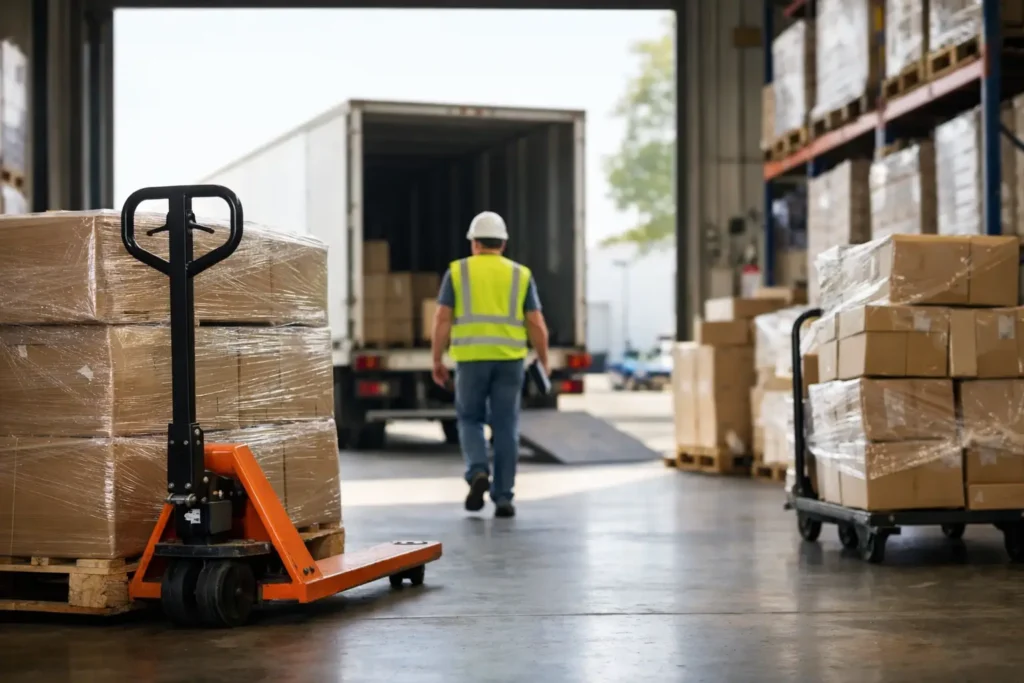
A warehouse move can look simple on a site plan: shift the racking, move the stock, set up at the new address. In practice, a warehouse relocation example quickly shows why the detail matters. If one loading zone is blocked, a pick face is labelled poorly, or forklifts arrive before the floor is ready, the disruption can flow through the whole business.
For a warehouse manager, the goal is not simply to get everything from A to B. It is to protect stock, keep people safe, preserve order records and give the team a workable site when trading resumes. Here is a practical example of how a well-organised relocation can work.
The warehouse relocation example
Imagine a growing Ipswich-based distributor moving from a 600-square-metre warehouse to a larger facility nearby. The business carries packaged trade supplies, has around 1,200 stock-keeping units and dispatches orders every weekday. It needs more room for incoming pallets and safer separation between picking, packing and despatch.
The move cannot happen as one big rush on a Friday afternoon. Orders still need to leave, staff need clear instructions, and the new warehouse must be ready to receive stock in the correct sequence. The manager sets a weekend move window, with a short dispatch cut-off on Friday and the new site scheduled to operate on Monday morning.
That timing is sensible, but it only works because planning begins several weeks earlier. A removal team is brought in early to understand access at both sites, the type of stock involved, the racking layout, loading dock conditions and any items requiring extra care. This is where a local, accountable removals team can make a real difference. Good planning is not paperwork for its own sake. It prevents unnecessary handling, wasted trips and confusion when the pressure is on.
Start with a map, not a truck
Before anything is packed, the manager creates a clear destination plan. Each zone at the new warehouse has a name, a floor location and a purpose: receiving, reserve storage, fast-moving pick faces, packing benches, despatch, returns and office equipment.
The key is to label stock according to where it needs to land, rather than where it came from. For example, cartons from aisle B at the old site may be destined for reserve pallet bays R12 to R18 at the new location. Fast-moving lines are allocated close to the packing area. Bulky, slower-moving items go to higher or less accessible bays where they will not interfere with daily work.
This step sounds obvious, yet it is one of the most common causes of a slow restart. Moving stock by old aisle number can recreate an old layout that no longer suits the new space. Moving it by the new operating plan helps the team begin properly from day one.
The warehouse manager also identifies stock that should not move with everything else. Obsolete items, damaged cartons, returns awaiting assessment and general rubbish are separated before move weekend. There is little value in paying the physical and organisational cost of relocating items that no longer serve the business.
Protect continuity before the move begins
The distributor in this example cannot shut down completely. Its regular customers expect orders, and a missed despatch may cause trouble further down the supply chain. Rather than trying to move every item at once, the manager creates a continuity list.
The list covers the fastest-selling products, current customer orders, essential packing materials, scanners, label printers and the office equipment needed to keep communication flowing. These items are either moved late on Friday for immediate set-up or held in a clearly controlled area for the first run to the new site.
Stock counts are also checked before loading. A full count may not always be practical, particularly in a larger operation, but a targeted count of high-value and high-turnover lines provides a reliable checkpoint. Pallets are photographed where useful, cartons are labelled clearly, and the inventory system is updated with a planned cut-over time.
It depends on the business whether stock should be moved palletised or broken down into smaller loads. Stable, shrink-wrapped pallets are generally safer and quicker to handle as units. Mixed cartons, fragile stock or irregular items may need individual protection and more careful placement in the truck. The right approach balances speed with the risk of damage or lost stock.
Set the new site up before stock arrives
A common mistake is treating the new warehouse as an empty destination. It should be a functioning workplace before the first truck reverses into the dock.
In this example, racking is installed and checked ahead of time. Aisles are marked, pedestrian routes are clear, and the loading area is kept free for incoming vehicles. Power, lighting, internet and security access are tested. The manager makes sure staff know where the amenities, first-aid supplies, evacuation points and emergency exits are located.
Packing benches and despatch stations are established early, even if the office still looks unfinished. This gives the team somewhere to process urgent orders once essential stock arrives. It also stops scanners, printers, tape dispensers and paperwork from being buried under general cartons.
Equipment deserves its own plan. Forklifts, pallet jacks, trolleys, work benches and shelving are not just large items to transport. They are the tools that make unloading possible. If a forklift is moved before there is a safe replacement available at the old site, loading can stall. If it arrives after stock, unloading slows down. The move sequence needs to account for both sites at once.
Move in an order that supports the restart
On move weekend, the removal crew works to the destination map and load order. Less urgent reserve stock goes first, followed by general shelving and non-essential office furniture. The fast-moving pick lines, despatch supplies and critical equipment are scheduled so they can be set up last at the old warehouse and unloaded early at the new one.
Every load is checked off before departure and again on arrival. The person doing this does not need to manage every lift, but they do need authority to stop a load if labels are unclear or the destination area is not ready. A short delay to solve a problem is far better than unloading dozens of cartons into the wrong zone.
Communication stays practical. The warehouse manager, site supervisor and removal lead confirm progress at set points through the day: what has left, what has arrived, what remains, and whether the next area is ready. Staff should know who is making decisions. When everyone gives instructions at once, mistakes multiply.
Careful handling is especially important for office servers, scanners, computers, sensitive equipment and fragile product lines. These items need suitable packing and should be loaded where they will not shift under heavier freight. A capable removals team will also assess difficult access, tight loading areas and heavy equipment well before the move date, rather than improvising when the truck is already on site.
Monday morning: test the work, not just the layout
By Sunday afternoon, the new warehouse in this example looks organised. The real test comes on Monday. Can an order be picked, packed, labelled and loaded without staff searching through cartons or stepping around unfinished areas?
The manager begins with a short walkthrough. Team members check the pick faces, scanner connections, printer operation, safety paths and stock locations for the most urgent orders. Any errors are recorded and fixed as they are found. The team also checks that reserve stock is correctly identified, so replenishment does not become a guessing game later in the week.
There will usually be a few loose ends. A move can be well run without being flawless. The difference is whether those loose ends are visible, assigned and manageable. A missing label on one bay is a quick fix. A whole truckload of mixed stock placed without a location plan can cost days of lost productivity.
For the distributor, the first day is successful because normal despatch resumes and staff can work safely. The new warehouse is not fully polished, but it is operational. Over the following week, the manager fine-tunes stock placement based on actual picking patterns and removes any remaining empty cartons or unwanted materials.
What this example means for your move
A warehouse relocation is part logistics project, part business continuity plan. The trucks matter, but the result depends just as much on the layout, labels, load sequence and people coordinating the work.
If your business is preparing to move, start by asking a simple question: what must be ready for us to serve customers on the first working day? Build the move around that answer. With a clear plan, careful handling and a removal team that takes responsibility for the details, a warehouse move can feel controlled rather than chaotic. Springall Movers can help businesses plan the practical side of that transition with care, clear communication and a focus on getting your operation moving again.