
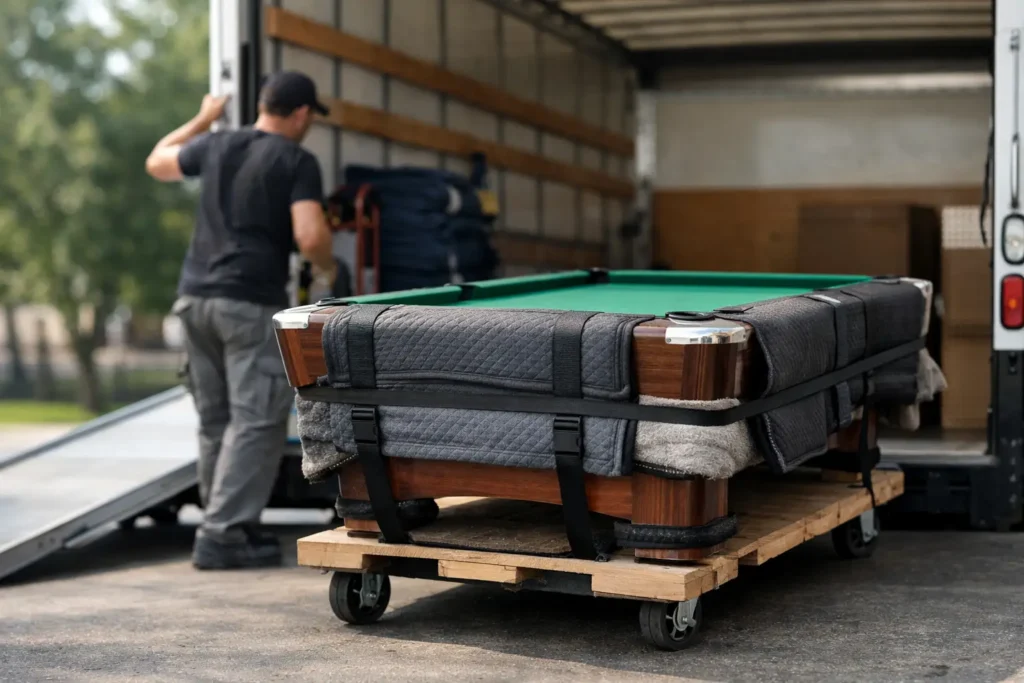
A pool table can look solid enough to survive anything, right up until someone tries to shift it in one piece. That is usually when the trouble starts – torn felt, cracked slate, bent legs, damaged door frames, and a move that suddenly feels much bigger than expected. Secure transport for pool tables is not about brute force. It is about planning, protection, and handling each part the right way from start to finish.
Pool tables are awkward, heavy, and far more delicate than they appear. The weight is not spread evenly, the slate can crack if stressed, and even a small knock in the wrong spot can affect how the table plays once it is set up again. If you care about keeping the table in good condition, the move needs to be treated as a specialty job, not just another item on the truck.
Why secure transport for pool tables matters
Most people focus on the table’s weight first. Fair enough – many pool tables are extremely heavy. But the bigger issue is how that weight is distributed. A table might have a timber frame, precision-cut slate sections, rails, pockets, legs and felt, all working together to create a level playing surface. When it is moved badly, each of those parts can be affected in different ways.
The slate is the main concern. It is strong when supported properly, but it is not indestructible. Lifting from the wrong point, transporting without enough padding, or letting the table shift in transit can lead to cracks or chips. Even if the damage looks minor, it can change the table’s performance.
Then there is the felt and timber finish. Dragging parts across rough surfaces, stacking components carelessly, or exposing them to moisture can leave obvious marks. These are not always easy fixes. In some cases, one rushed move creates a repair job that costs more in time and stress than people expected.
Why pool tables should usually be disassembled
There are rare situations where a pool table can be moved with minimal disassembly, but most of the time, taking it apart is the safer option. The table becomes easier to manage, easier to protect, and less likely to damage the property it is moving through.
A proper disassembly usually involves removing the pockets, rails, felt where necessary, slate sections and base components in a careful order. That order matters. If parts come off without proper support or labelling, reassembly becomes harder and the chance of damage increases.
This is one of those jobs where speed can work against you. Moving fast sounds efficient, but if hardware is mixed up, slate is handled roughly, or parts are not wrapped correctly, the move is no longer efficient at all. A slower, methodical approach is usually what keeps the table safe.
What secure transport for pool tables actually involves
Good handling starts well before moving day. Access needs to be checked first. That means looking at stair access, tight hallways, narrow doorways, turns, outdoor surfaces and truck loading points. A table might fit comfortably in a games room, but getting it out is often the hard part.
Once the path is clear, each component should be protected based on what it needs. Slate needs firm support and careful carrying. Timber sections need padding to prevent scratches and pressure marks. Smaller hardware needs to be contained and labelled so nothing goes missing. The truck itself matters too. A table cannot just be loaded wherever there is spare room. It needs stable placement and restraint so parts do not shift during transport.
That is the difference between moving a pool table and transporting it securely. Anyone can lift something heavy. Secure transport means reducing risk at each stage – disassembly, carrying, loading, transit, unloading and setup.
The common mistakes that cause damage
A lot of pool table damage happens because people underestimate how technical the move is. One common mistake is trying to move the table assembled. It might seem quicker, but it puts stress on the frame, legs and slate all at once. It also makes the item harder to manoeuvre through the property, which increases the chance of knocks and scrapes.
Another issue is using general moving gear without thinking about the table’s weak points. Thick blankets help, but they are not enough on their own if the slate is unsupported or the rails are stacked badly. Trolleys and lifting straps can help in some situations, but they have to be used correctly.
There is also the matter of reassembly. Even when transport goes well, a poor setup at the other end can leave the table uneven or unstable. A pool table is not really ready to use just because it is back in the room. It needs to be reassembled with care and checked properly.
Moving within the same home versus moving interstate
Not every pool table move looks the same. Shifting a table from one room to another has different risks from transporting it to a new home across state lines. Still, the same rule applies – the longer and more complex the journey, the more important proper preparation becomes.
For short-distance moves, access is often the biggest challenge. Tight spaces, polished floors, stairs and internal walls all need protection. For longer moves, transit conditions become more significant. Vibration, repeated loading pressure and travel time all add up, especially for slate sections and finished timber.
That is why a one-size-fits-all approach rarely works. The best handling plan depends on the table itself, the property layout, and the distance involved. A local team with real-world removal experience can usually spot these variables early and avoid trouble before the move starts.
What to ask before booking a pool table move
If you are arranging secure transport for pool tables, it helps to ask practical questions rather than broad ones. You want to know whether the mover understands specialty items, whether disassembly and reassembly are part of the process, and how the table will be protected in the truck.
It is also worth asking about insurance and what level of care is taken with access planning. These questions are not about making the job harder. They are about avoiding assumptions. A good mover should be clear, straightforward and comfortable explaining how the table will be handled.
For households and businesses around Ipswich, that clarity matters. Moves are stressful enough without wondering whether a heavy slate table is being treated like a spare bookshelf.
When DIY makes sense, and when it really does not
Some people are comfortable handling difficult moves themselves, especially if they have the right tools and enough help. But pool tables sit in a category where DIY often looks easier than it is. The challenge is not only lifting the parts. It is protecting them, keeping them organised, and making sure the table can be set up properly again.
If the table is smaller, access is simple, and the people helping have genuine experience, a careful DIY move may be possible. Even then, there is still risk. If the table is full-sized, slate-based, going up or down stairs, or travelling a longer distance, professional handling is usually the safer choice.
This is not about scare tactics. It is simply one of those jobs where experience tends to show. Knowing where to lift, how to support the slate, and how to load each component securely can make the difference between a smooth move and a very expensive mistake.
Choosing the right support for the job
A dependable removalist should treat a pool table as a specialty item from the first conversation, not as an afterthought added to a house move. That means asking the right questions, turning up prepared, and handling the table with the same care they would give to other high-value items.
At Springall Movers, that careful approach is part of the job. For customers moving house, relocating a business, or shifting selected heavy items into storage, clear planning and respectful handling go a long way. No fuss. No guesswork. Just a move that is organised properly from the start.
If you are planning to move a pool table, the safest step is to think beyond the lift itself. Focus on how it will come apart, how it will travel, and how it will be set up again at the other end. When those details are handled well, the table has a much better chance of arriving ready for many more games.