
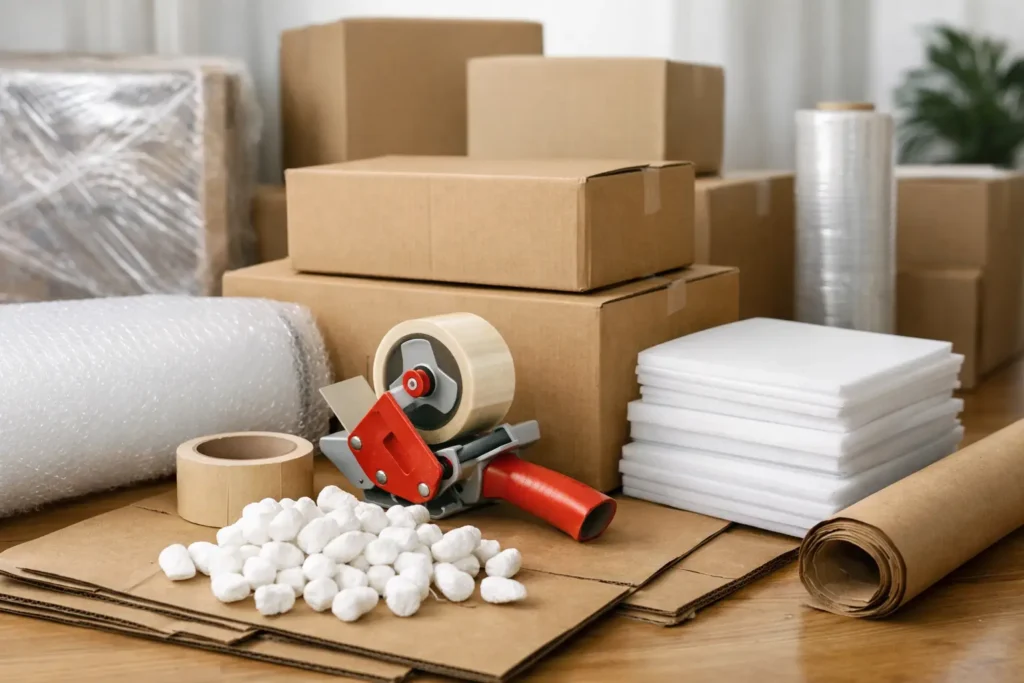
The box marked kitchen always looks manageable until you remember what is actually in it – glassware, sharp utensils, heavy appliances, odd-shaped platters, and the mug collection nobody wants to lose. That is why choosing the best packing materials for moving is not about grabbing whatever is cheapest at the last minute. The right materials make packing faster, lifting safer, and damage far less likely.
A good move runs on two things: proper planning and proper protection. If either one is missing, small problems pile up quickly. Boxes split, tape lifts, labels fall off, and fragile items end up packed with too much space around them. The best results come from matching the material to the item, not treating everything in the house the same.
What makes the best packing materials for moving?
The short answer is strength, fit, and reliability. A material is only useful if it holds up under weight, protects against impact, and suits the type of item being packed. A heavy-duty carton might be perfect for books, but a poor choice for a large lampshade. Soft wrap might protect plates well, but it will not stop a box from collapsing if the carton itself is weak.
This is where people often come unstuck. They focus on cushioning and forget structure. In reality, both matter. Good packing materials work as a system – strong boxes, quality tape, protective wrap, and clear labelling all doing their part.
Start with boxes that suit the load
Boxes are the backbone of any move, and not all cartons are equal. New or high-quality moving boxes are generally the safest option because they are built to stack, carry weight, and handle transport without giving way. Reused supermarket cartons can look fine on the outside but still be weakened by moisture, crushing, or previous heavy loads.
Small boxes are best for dense items such as books, files, tools, pantry goods, and anything unexpectedly heavy. Large boxes are better for lighter, bulkier items like linen, cushions, toys, or clothing. Mixing that up is one of the quickest ways to create boxes that are hard to lift and easy to damage.
For some items, standard cartons are not enough. Wardrobe boxes help keep hanging clothes clean and crease-free. Picture cartons give framed art and mirrors extra structure. Dish packs, with thicker walls, are well suited to kitchenware and fragile pieces. If you are moving an office, archive-style boxes help keep paperwork contained and easier to unpack in order.
Packing paper does more work than most people realise
If there is one material that earns its place in almost every move, it is clean packing paper. It is simple, versatile, and safer for many household items than people expect. It wraps plates, fills gaps, cushions glasses, separates stacked bowls, and protects surfaces from scratches.
It also avoids a common issue that comes with printed paper. Newspaper can leave ink marks on plates, cups, and decorative items, which just creates another job at the other end. Clean paper is a better choice, especially for kitchenware, white fabrics, and anything porous.
The key is not just wrapping items individually, but using paper to stop movement inside the box. Even a well-wrapped item can chip if it has room to knock around during loading and transport.
Bubble wrap is useful, but not for everything
Bubble wrap has its place, particularly for delicate or breakable items. It is a solid option for glassware, ceramics, electronics, décor, and framed pieces that need impact protection. For high-care items, layering it properly can make a real difference.
That said, it is not the answer to every packing problem. Bubble wrap adds bulk quickly, and if it is used on everything without thought, boxes become oversized and inefficient. It also works best when paired with a box that fits well. Too much wrap in a loose carton still leaves room for shifting.
For some items, a combination works better. Packing paper against the item, then bubble wrap around it, often gives better protection than bubble wrap alone. That is especially true for polished surfaces and delicate finishes.
Strong tape is not optional
Cheap tape causes expensive headaches. When cartons are being lifted, stacked, shifted in the truck, and carried into a new property, the tape needs to stay put. A weak seal can fail at the bottom of the box or peel away at the top before the move is even underway.
A proper packing tape with good adhesion is worth using from the start. Boxes should be sealed along the centre seam and reinforced across the edges where needed. Heavier cartons may need extra support underneath. This is not overdoing it. It is basic protection.
Tape also matters for efficiency. Boxes that stay closed are easier to stack neatly, easier to label, and quicker to handle on moving day.
Protective padding for furniture and large items
Smaller household goods get most of the packing attention, but furniture often takes the bigger knocks. Moving blankets, furniture pads, and stretch wrap help protect surfaces from scuffs, dents, and dust during handling and transport. They are especially useful for timber furniture, whitegoods, TVs, and office equipment.
Stretch wrap can also help keep drawers and doors closed, though it should be used with care on delicate finishes. Blankets are better where rubbing or pressure might mark the surface. For larger pieces, the goal is less about cushioning a fall and more about preventing scratches, friction, and impact damage while items are being manoeuvred through doorways and into the truck.
Mattress protectors are another smart inclusion. They keep mattresses cleaner in transit and storage and make handling easier, especially if the move involves weather, dust, or multiple stops.
Labels matter more than people think
Labelling is not just for staying organised. It helps protect your belongings because it tells everyone handling the carton what is inside, where it belongs, and whether it needs special care. A clearly marked box is less likely to be stacked under something too heavy or sent to the wrong room.
A marker pen and simple labels are usually enough. Room name, brief contents, and notes such as fragile or this side up can save a lot of confusion later. Colour coding can help for larger family homes or office relocations, but clear writing is often the most practical approach.
If you are packing in stages over several days, labelling as you go is far better than trying to remember everything at the end. By that point, every carton starts to look the same.
The best packing materials for moving fragile, valuable, or awkward items
Some belongings need more than standard packing supplies. Glass tabletops, artwork, mirrors, musical instruments, antiques, and specialty household items all benefit from a more tailored approach. The right material depends on the shape, weight, and surface of the item.
For framed pieces, corner protectors and sturdy cartons reduce pressure on the glass and edges. For electronics, anti-static wrapping and firm outer cartons are safer than tossing them into oversized boxes with loose fill. For heavy decorative items or collectables, double boxing can be the better option, but only if the outer carton remains stable and not too heavy to carry safely.
This is often where professional packing support is worth considering. Items with unusual shapes or high sentimental value are usually not the place to improvise.
Don’t forget what happens after packing
Good materials should make unpacking easier too. That means keeping similar items together, avoiding overfilled cartons, and using supplies that can be opened without damaging what is inside. A box packed neatly with the right materials is easier to carry, easier to stack, and far easier to unpack without surprises.
It also helps if materials suit the full journey, not just the first hour. If your move includes storage, an interstate leg, or several handling points, your cartons and protective materials need to cope with more than a quick trip across town. What works for a short local move might not be enough for a longer relocation.
When better materials save time as well as damage
There is a practical side to all this beyond protection. Better packing materials usually mean faster loading, safer lifting, and less repacking on the day. Boxes that stack properly use truck space more efficiently. Proper labels reduce back-and-forth. Stronger wrapping means fewer pauses to fix split cartons or resecure loose items.
For families and businesses under time pressure, that matters. Packing is not just about keeping things safe. It is about keeping the whole move on track.
At Springall Movers, we see the difference good preparation makes every day. The right materials do not need to be complicated, but they do need to be fit for purpose. If you are unsure where to start, think about weight first, then fragility, then how far the item is travelling.
A calm move usually starts before the truck arrives. Choose packing materials that protect your belongings properly, and the rest of the day gets a whole lot easier.